iOS + Android · Flutter
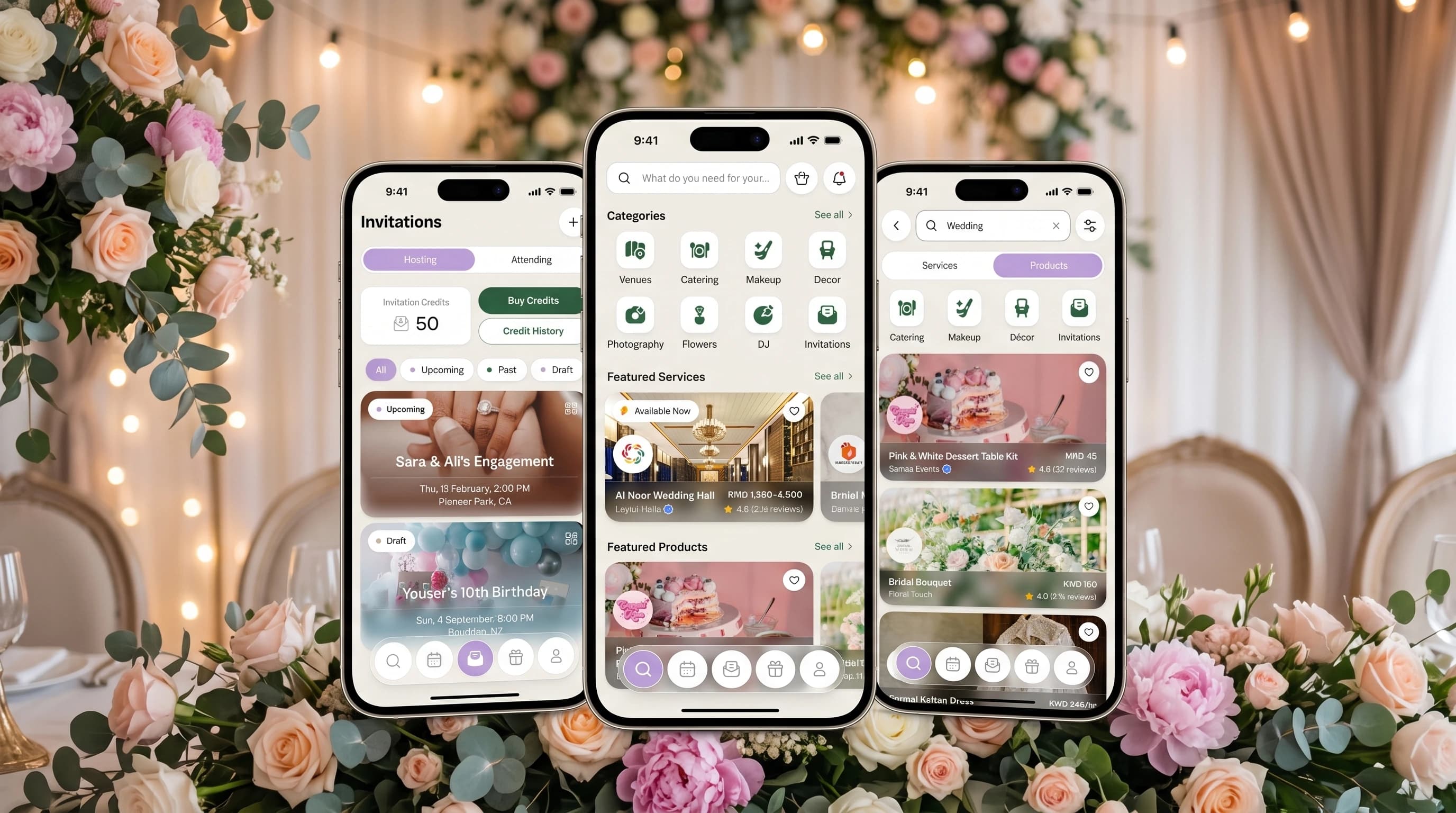
01Connect — Customer
- Registration and profile
- Vendor browsing and search
- Product ordering
- Coupons and offers
- KNET and MyFatoorah payments
- Live order tracking on Google Maps
- Reviews and ratings
- Notifications
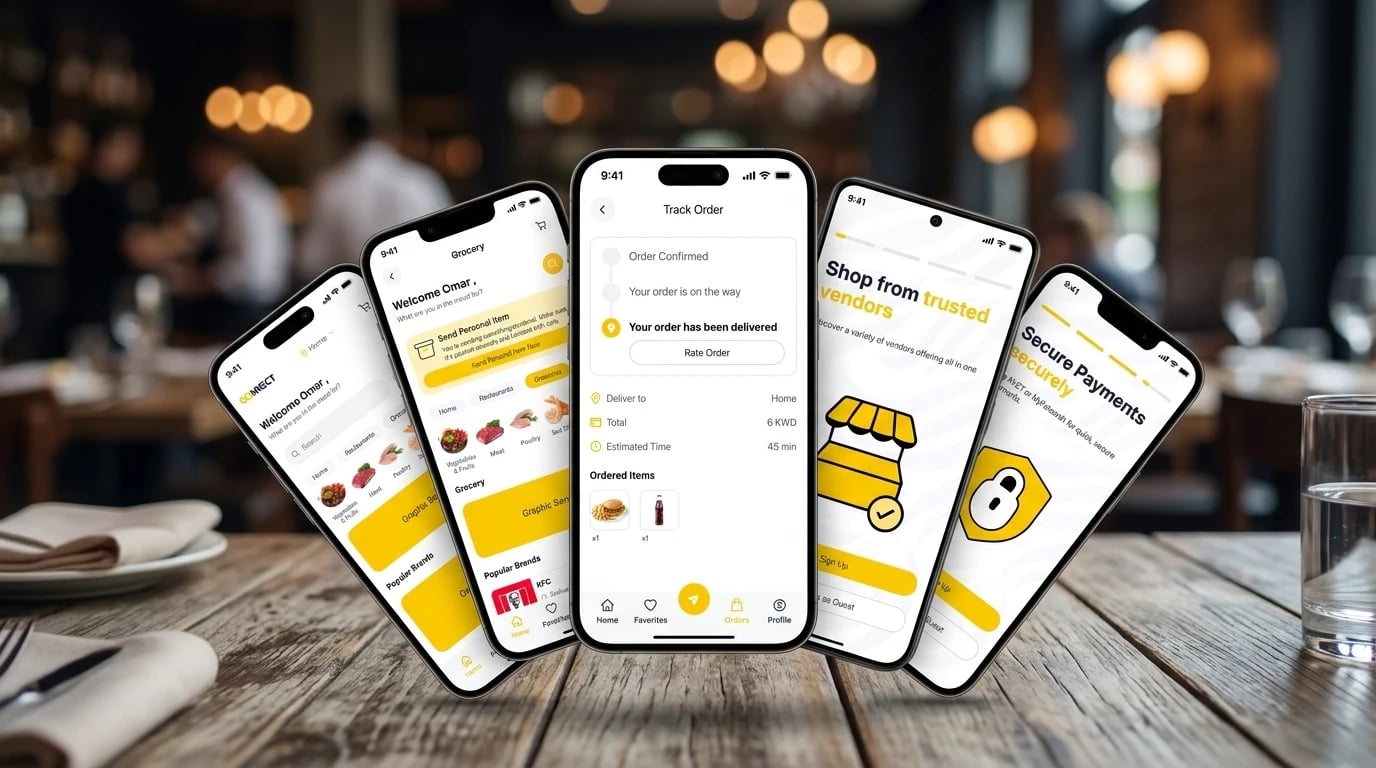
Connect runs customers, drivers, vendors and administrators on a single backend: ordering and live tracking on one side, KYC approval, commission control and finance management on the other, with KNET and MyFatoorah handling the money the way Kuwait actually pays.
Order volume and vendor numbers are the client's to publish, and they are not on this page. What is on this page is what was built and why it was built that way.
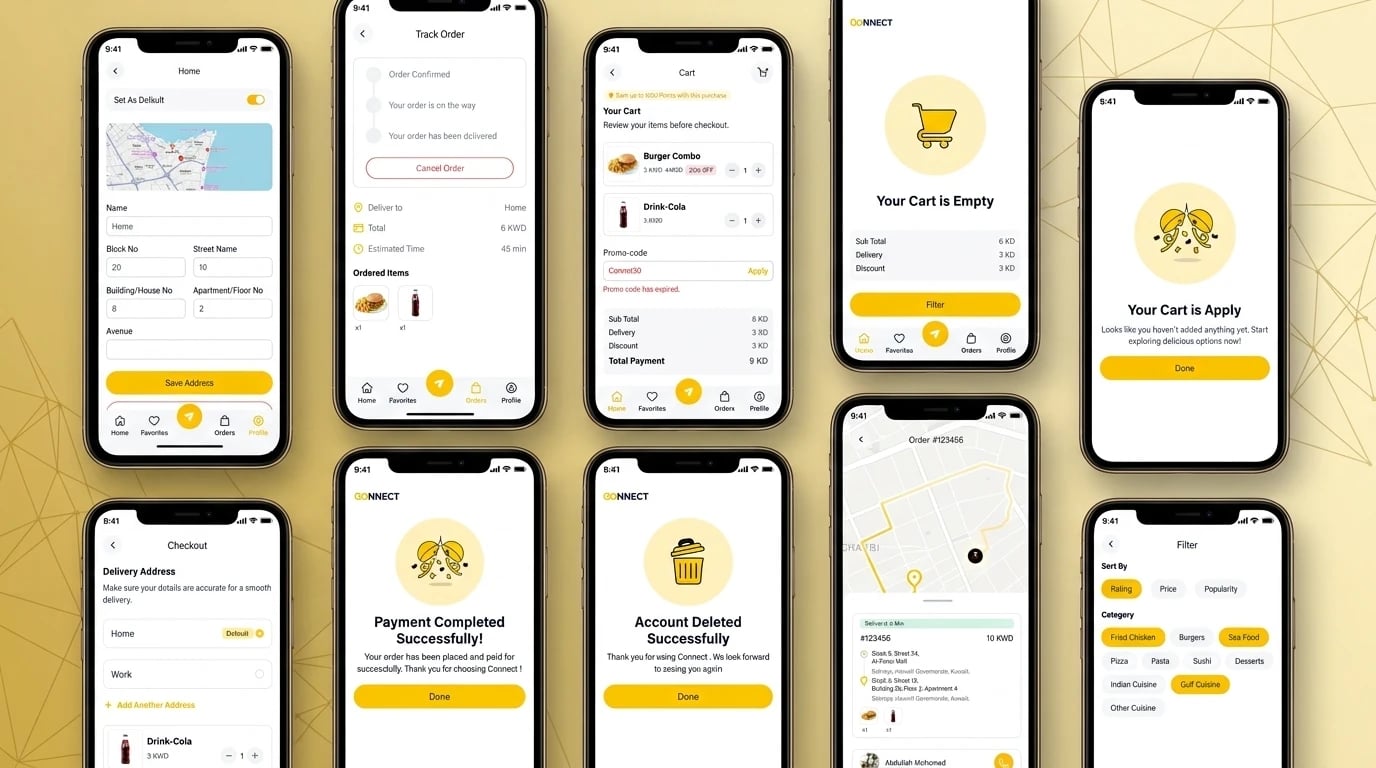
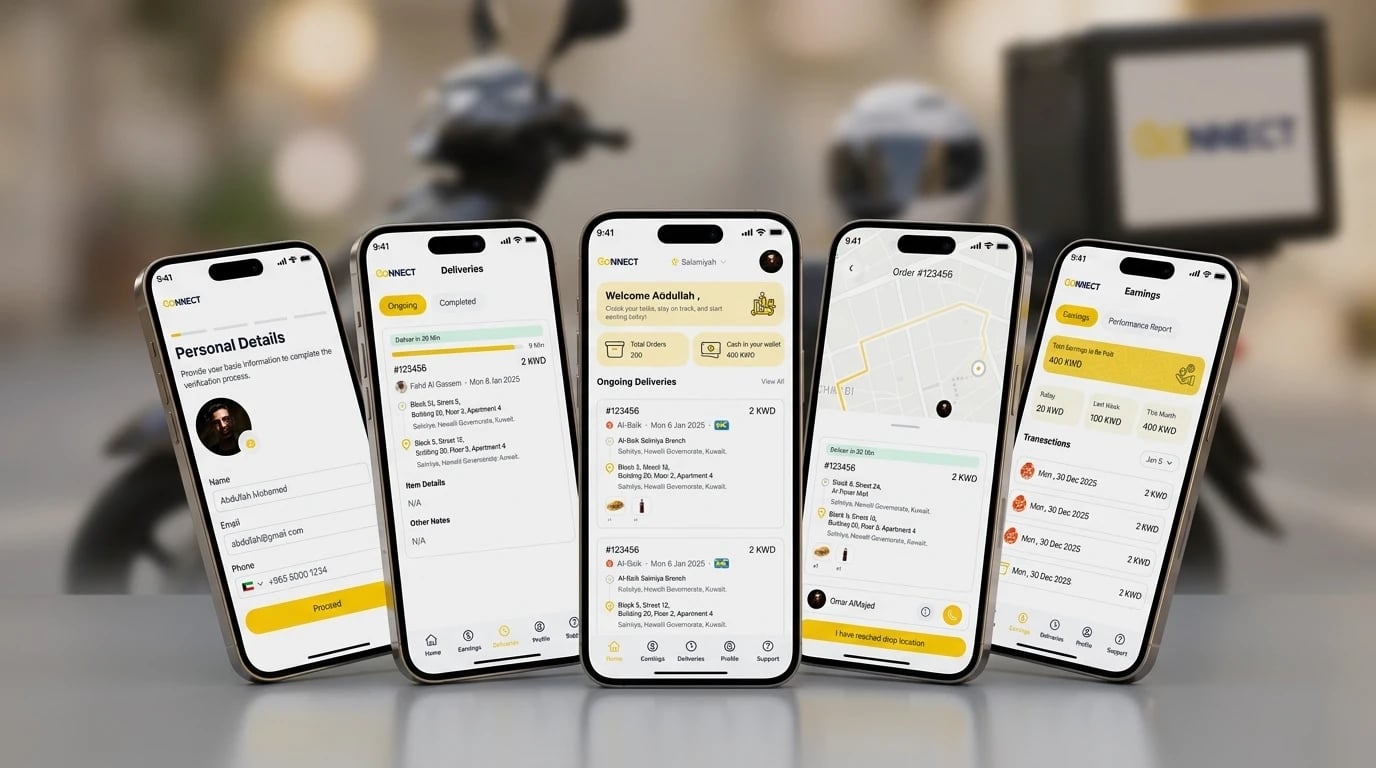
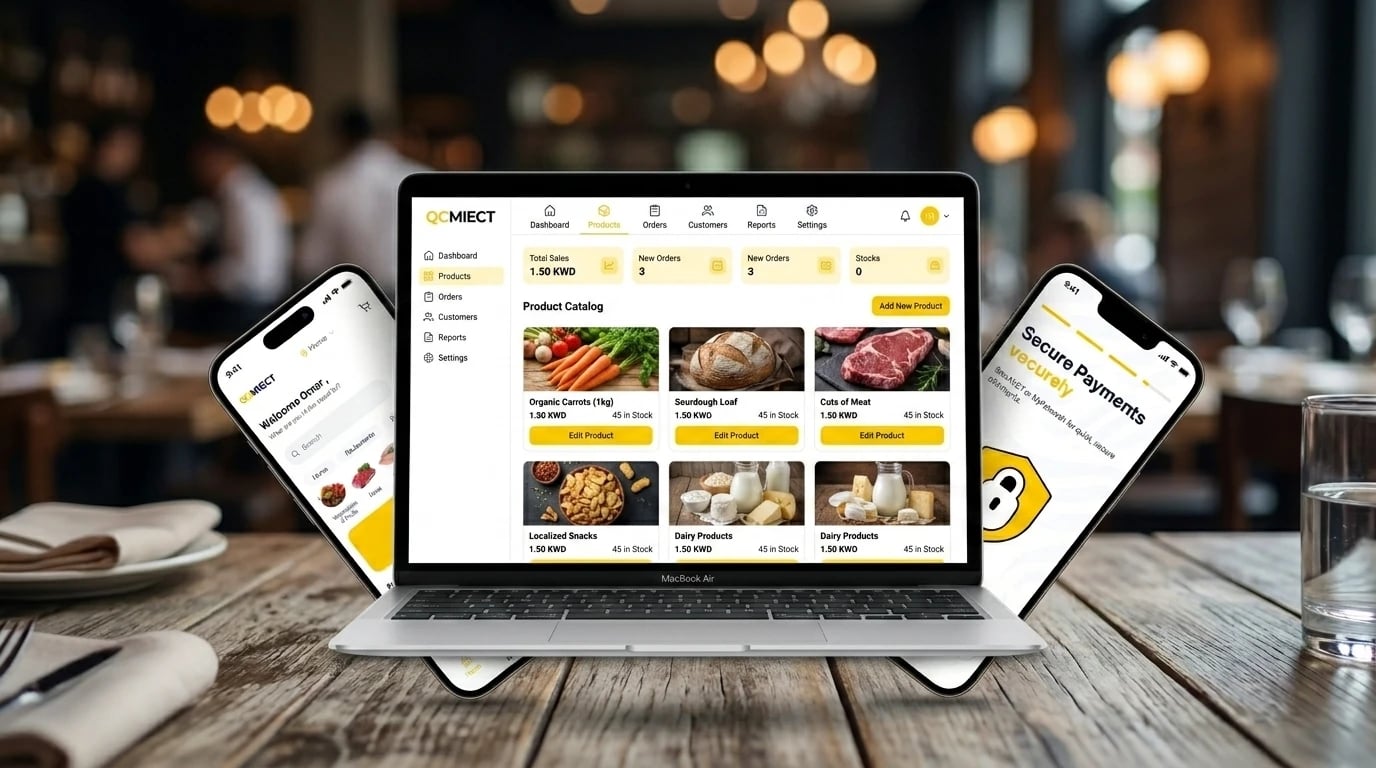
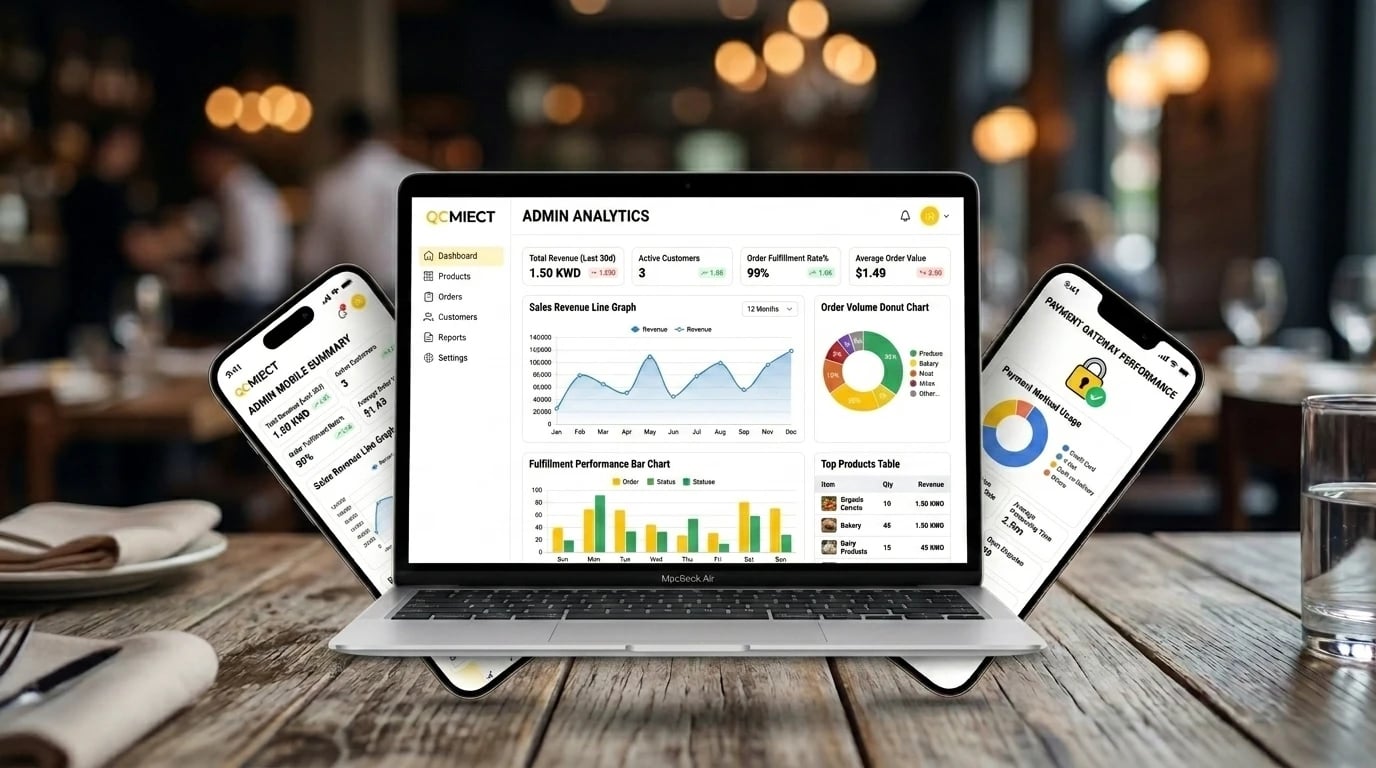
Connect is a delivery management platform for Kuwait covering four roles at once. Customers browse vendors, order, track a driver on a live map and pay. Drivers work through a guided delivery flow with navigation, availability control and earnings tracking. Vendors manage products, discounts, orders and performance from their own dashboard. Administrators sit above all three, approving vendor and driver applications, setting commissions and pricing, running memberships and finance, and pushing notifications platform-wide.
Connect was built for VGA, a Kuwaiti B2B client we have worked with since 2024 and for whom we have now delivered eight products. Connect is the largest of them.
The market matters here more than the category does. Kuwait pays through KNET — the national debit network — and through MyFatoorah as the aggregator most local merchants already use. A delivery platform that only accepts international cards is not a delivery platform in Kuwait; it's a demo.
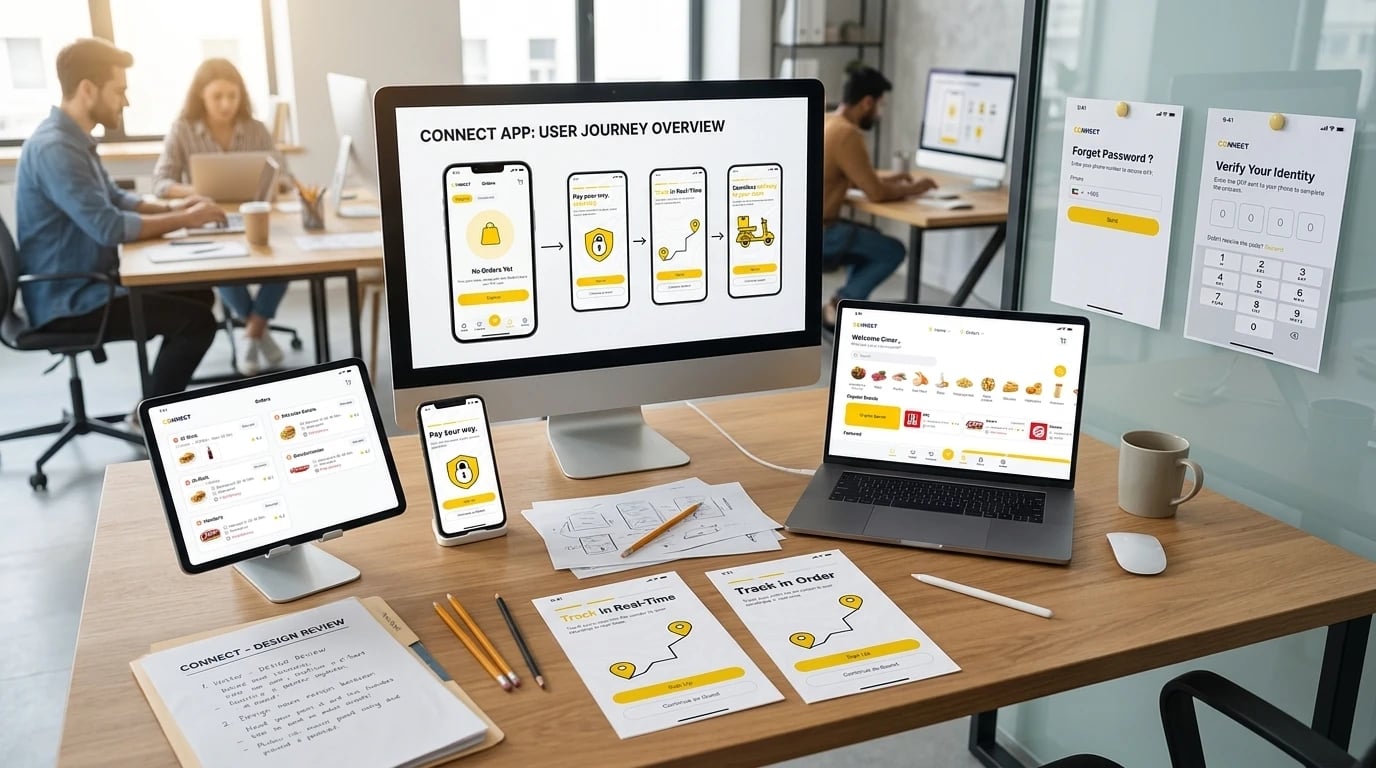
Most delivery builds are described as one app with some panels attached. In practice Connect is four products with genuinely different jobs, and the difficult ones are not the customer-facing ones. Anyone can order food. The hard side is the side where a business you have never met asks to sell on your platform, and a person you have never met asks to drive for it.
Both need verifying before they touch a customer or a payment. Both need approving, suspending and re-approving by an operator who is not a developer. And the money has to move correctly between all of them — commission to the platform, earnings to the driver, settlement to the vendor — on rails that behave differently from the ones most delivery platforms are built against.
Connect's four products each do a different job, and the two that decide whether the platform can grow are the ones the client's own team uses every day. These are the decisions that put the business in charge of itself.
Vendor and driver applications arrive with their documents, sit in a review queue, and are approved or rejected by the client's own team from the admin dashboard. Nobody has to call a developer to onboard a restaurant or verify a driver.
Commission rates, pricing rules and membership tiers are settings in the dashboard rather than values in code. A business that cannot change its own take rate without a deployment is not a platform.
KNET and MyFatoorah were built in from the start rather than added after an international gateway proved insufficient. In Kuwait that ordering is not a preference — it decides whether the app works.
Driver position and order state push to the customer's map and the vendor's queue in real time, so everyone is looking at the same order at the same moment instead of each client asking repeatedly.
Beyond per-order commission, vendors subscribe to tiers — so the platform earns from vendors who are present as well as vendors who are busy.
The backend runs in AWS me-central-1 rather than routing Kuwait traffic through Europe or Virginia. That is a latency decision and a data-residency decision at once, and it is the kind of thing a technical buyer checks.
Four roles read the same backend, so an order placed by a customer is the same record the driver, the vendor and the admin are each looking at.
Vendor and driver applications are reviewed and approved by the client's own team from the admin dashboard — onboarding a restaurant does not queue behind a developer.
Two separate KYC flows exist because a vendor and a driver are not the same risk and do not submit the same documents.
Commission rates, pricing, membership tiers, coupons and promotions are configuration, so the business can change its own economics without a deployment.
KNET and MyFatoorah are both in the build, so the platform accepts the way Kuwait actually pays rather than assuming an international card.
Driver position and order state push over Socket.io, so the customer's map and the vendor's queue move together instead of each polling for changes.
The backend runs in AWS me-central-1 — Kuwait traffic stays in-region instead of crossing to Europe or Virginia and back.
Membership tiers are administered from the dashboard alongside per-order commission, so vendor revenue has two sources rather than one.
Two apps cleared review on both stores — four listings, each with its own compliance answers, because a customer app and a driver app collect different data.
Building a platform that has to work with local payment rails?
The two apps are public and the two dashboards are internal — but all four are products, and all four read the same order.
Every tool below is in the build — no résumé-ware.
You start with how the market actually pays. Kuwait runs on KNET, the national debit network, and on MyFatoorah as the aggregator most local merchants already use — a platform that only accepts international cards will not convert there regardless of how good the app is. The same principle extends to hosting in-region for latency and data residency, and to Arabic support that's built in rather than translated on. Connect was built against local rails from the first sprint, not retrofitted after launch.
Through a KYC flow that ends at a human, not an algorithm. On Connect, vendors and drivers submit documents during onboarding, applications land in a review queue in the admin dashboard, and the client's own team approves, rejects or suspends them. The important design decision is that it belongs to the operator: a platform where onboarding a restaurant requires a developer will not scale past its first fifty vendors.
More than an app, because it isn't one. Connect needed a customer app, a driver app, a vendor dashboard and an admin dashboard, each with different screens, permissions and release cycles. We scope platforms in phases and quote each phase fixed-price after a free scoping call, so you can launch one role at a time rather than funding all four before seeing anything work.
Yes, and that's the test of whether it's a platform or a project. Commissions, pricing rules, membership tiers, coupons and promotions are all configuration in Connect's admin dashboard. If a business can't change its own take rate without a deployment, it doesn't control its own economics.
Driver position and order state push over websockets to the customer's map and the vendor's queue, rather than each client polling for updates. That keeps everyone looking at the same order status at the same moment, and it costs far less battery and bandwidth than repeated requests — which matters on a driver's device across a full shift.
Yes. Connect shipped four store listings — two apps across two platforms — each with its own metadata, screenshots, review notes and privacy declarations. Multi-app submissions are their own workstream: a rejection on the driver app shouldn't hold up the customer app, and the two need genuinely different compliance answers because they collect different data.
KNET, MyFatoorah, in-region hosting, four roles on one backend.
See how we'd scope yours.