Web
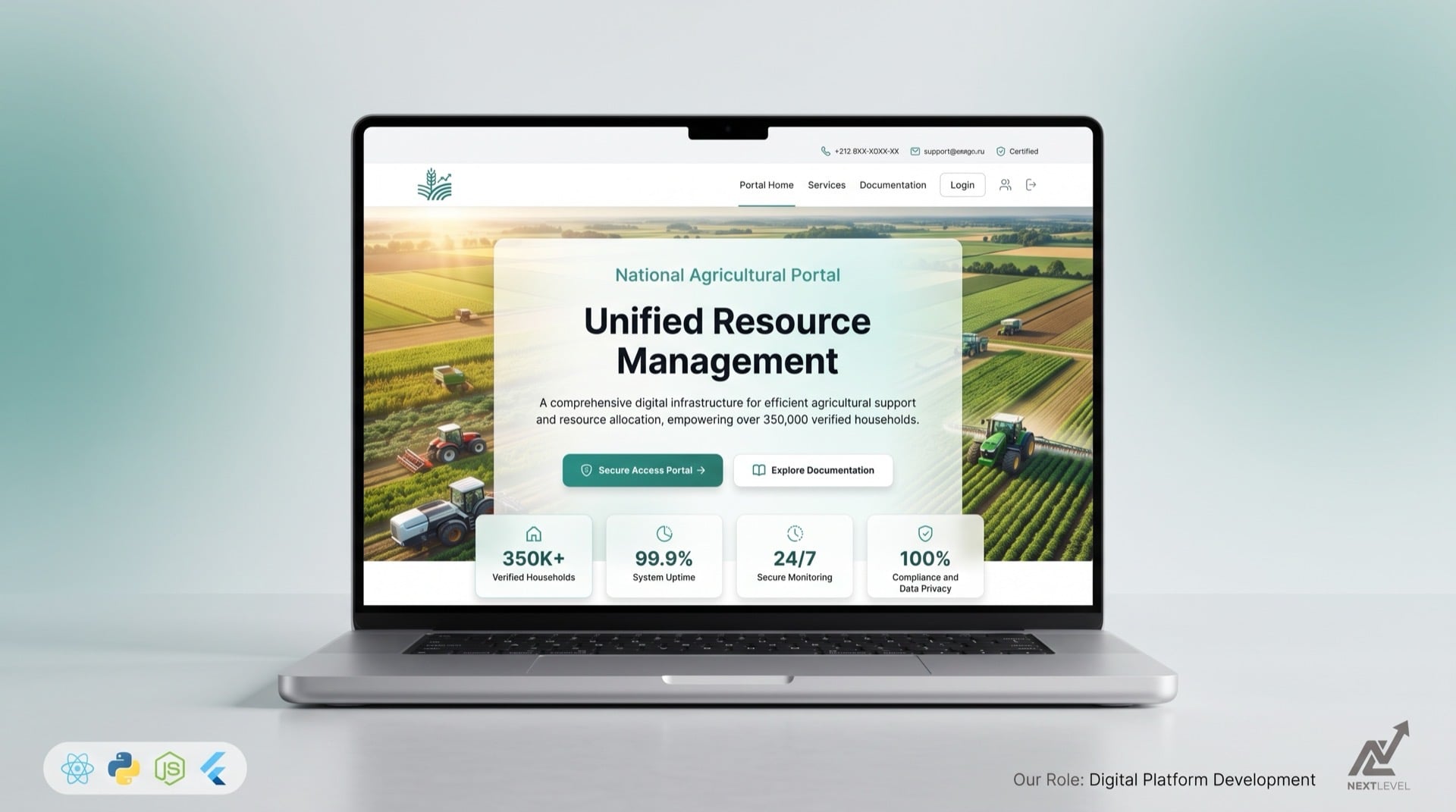
01Federation Panel
- Beneficiary & supplier management
- AOQ quota allocation & oversight
- Subsidy rate configuration
- Real-time reporting & audit-ready records
- Platform-wide announcements
- Commission & payout control
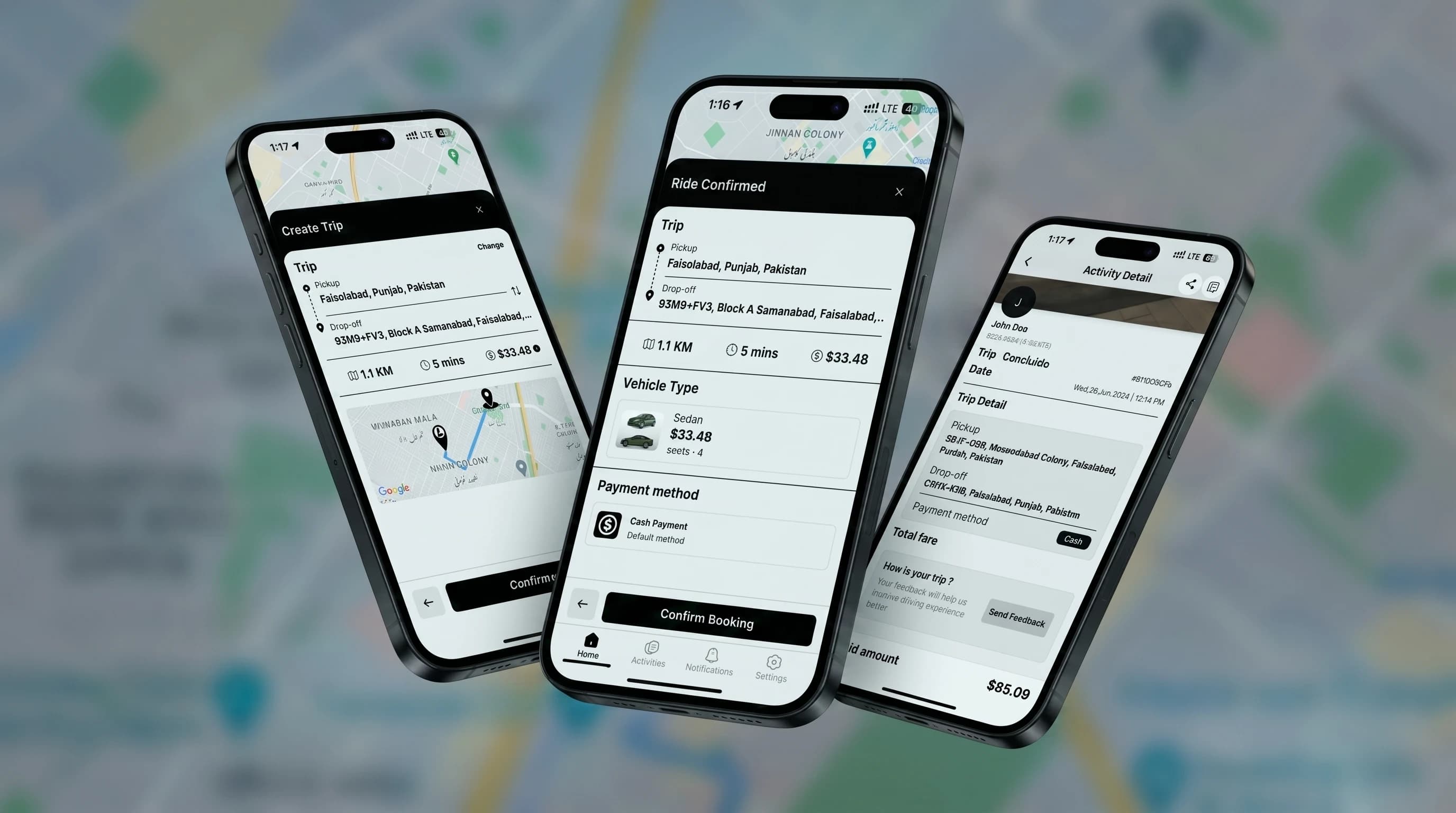
A government-backed supply chain platform connecting 2,000+ cooperatives, suppliers, drivers and the Federation — quota allocation, delivery proof and invoicing on one backend.
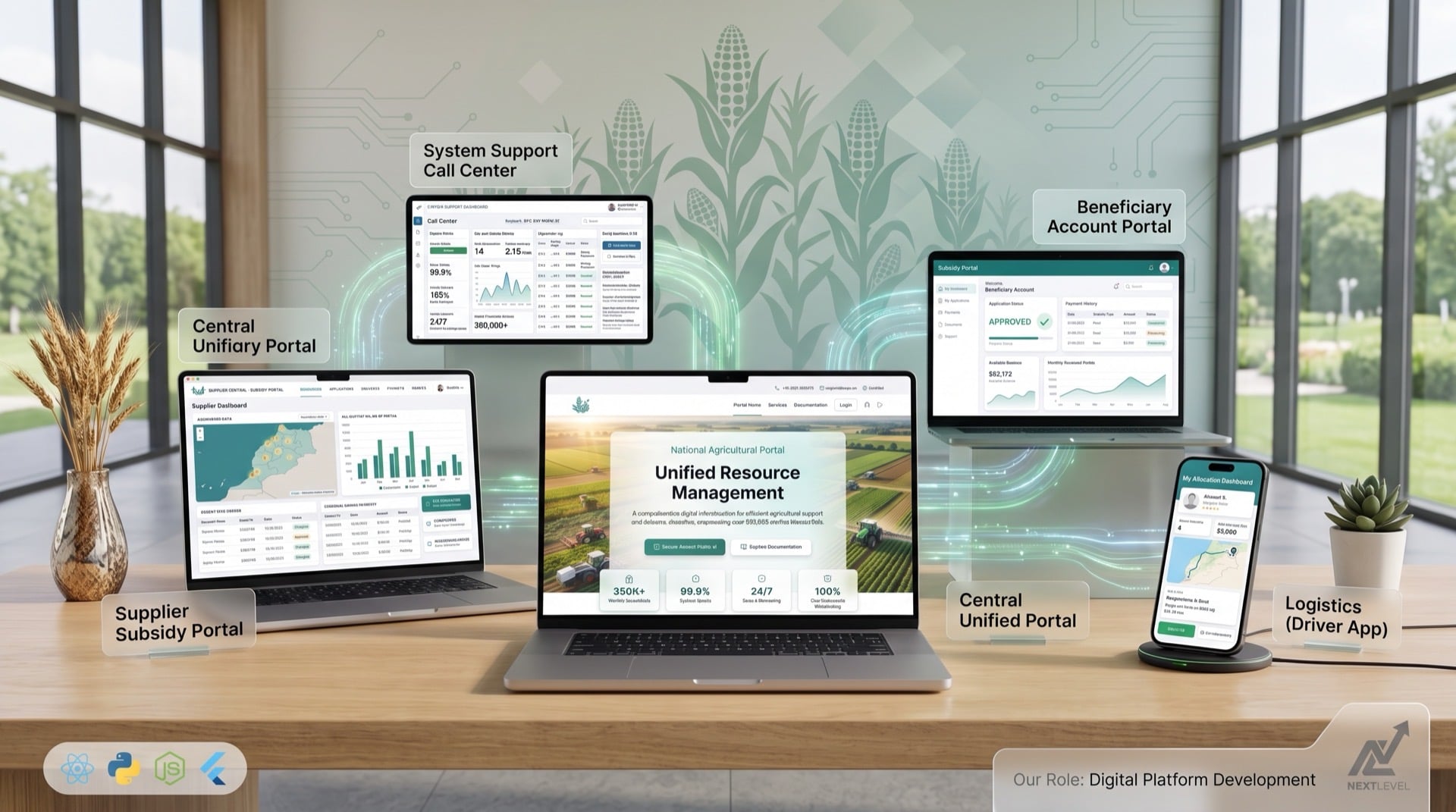
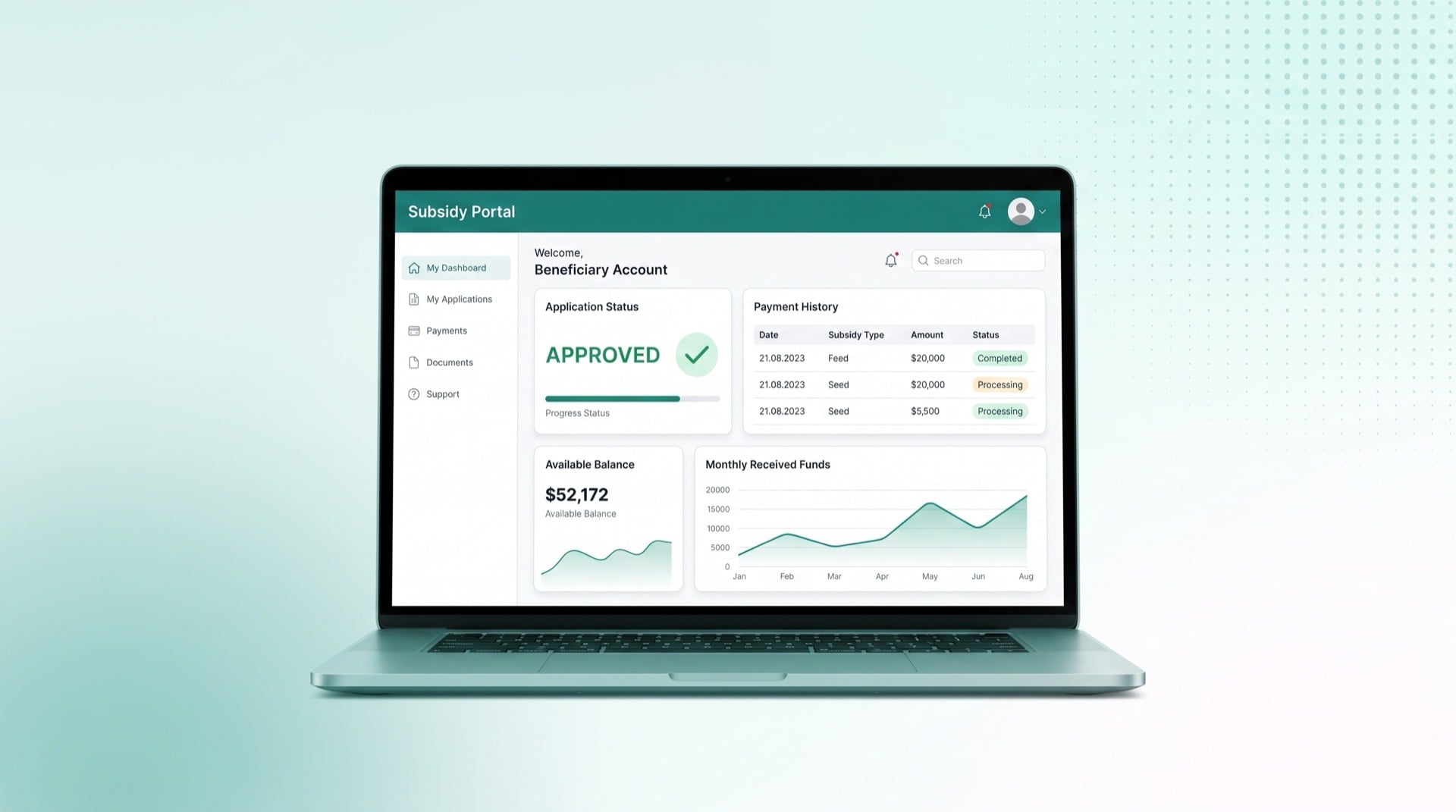
Subvention Maroc Lait connects the Federation, 2,000+ cooperatives, suppliers, drivers and a call centre on one backend: quotas are allocated centrally, beneficiaries order within their limits, suppliers confirm and invoice, and drivers capture digital proof of delivery in rural areas — every step audit-ready.
The client's vision was a complete digital chain: one platform where the Federation allocates quotas, beneficiaries order within their limits, suppliers confirm and invoice, drivers deliver with digital proof, and a call center handles support — all connected to one backend, audit-ready from day one.
Cooperatives and farmers across Morocco relied on manual, paper-based processes to request subsidized animal feed — no centralized tracking, no real-time status, and no proof of delivery. Subsidy payments were delayed, leakage risk was high, and the Federation had no visibility into whether public funds were reaching the intended beneficiaries.
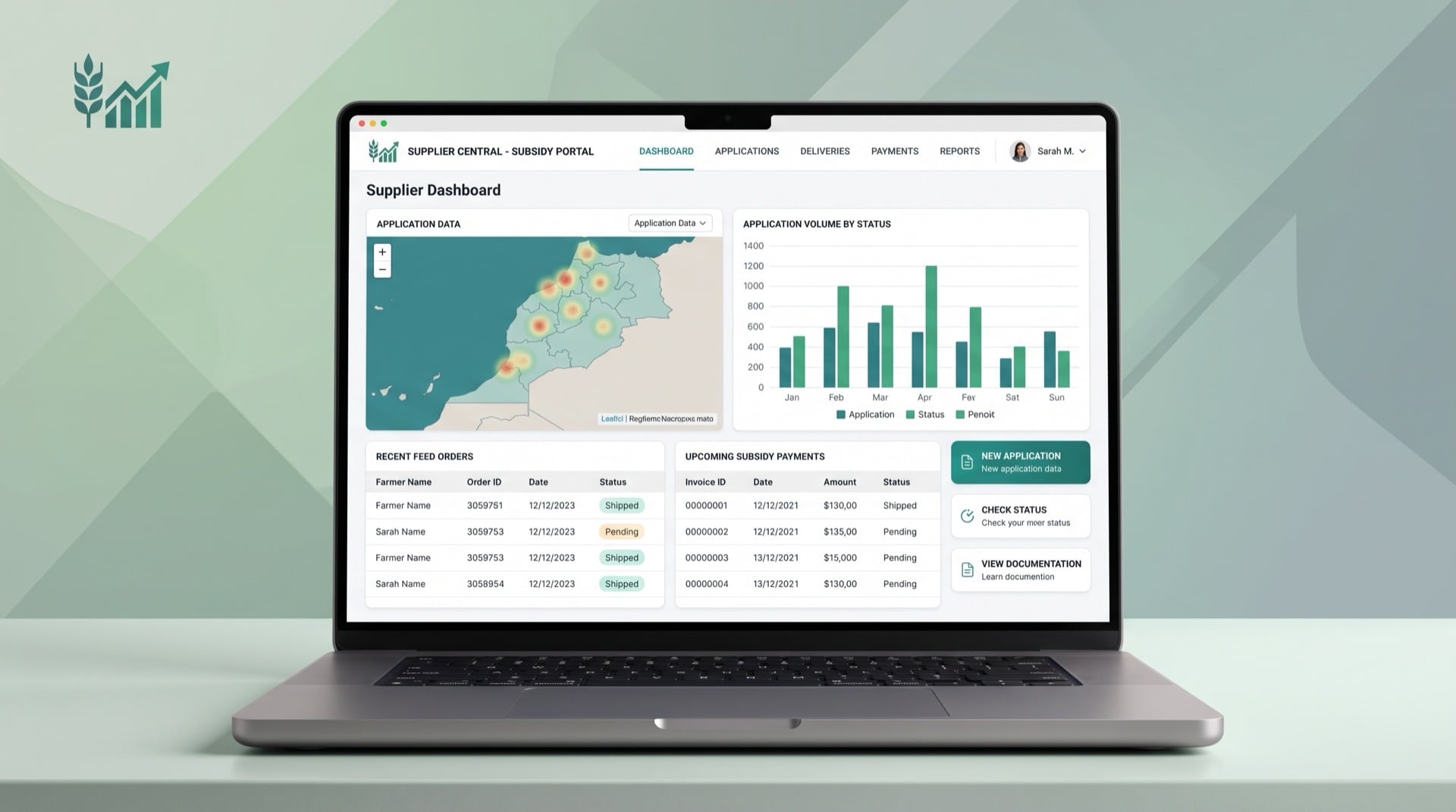
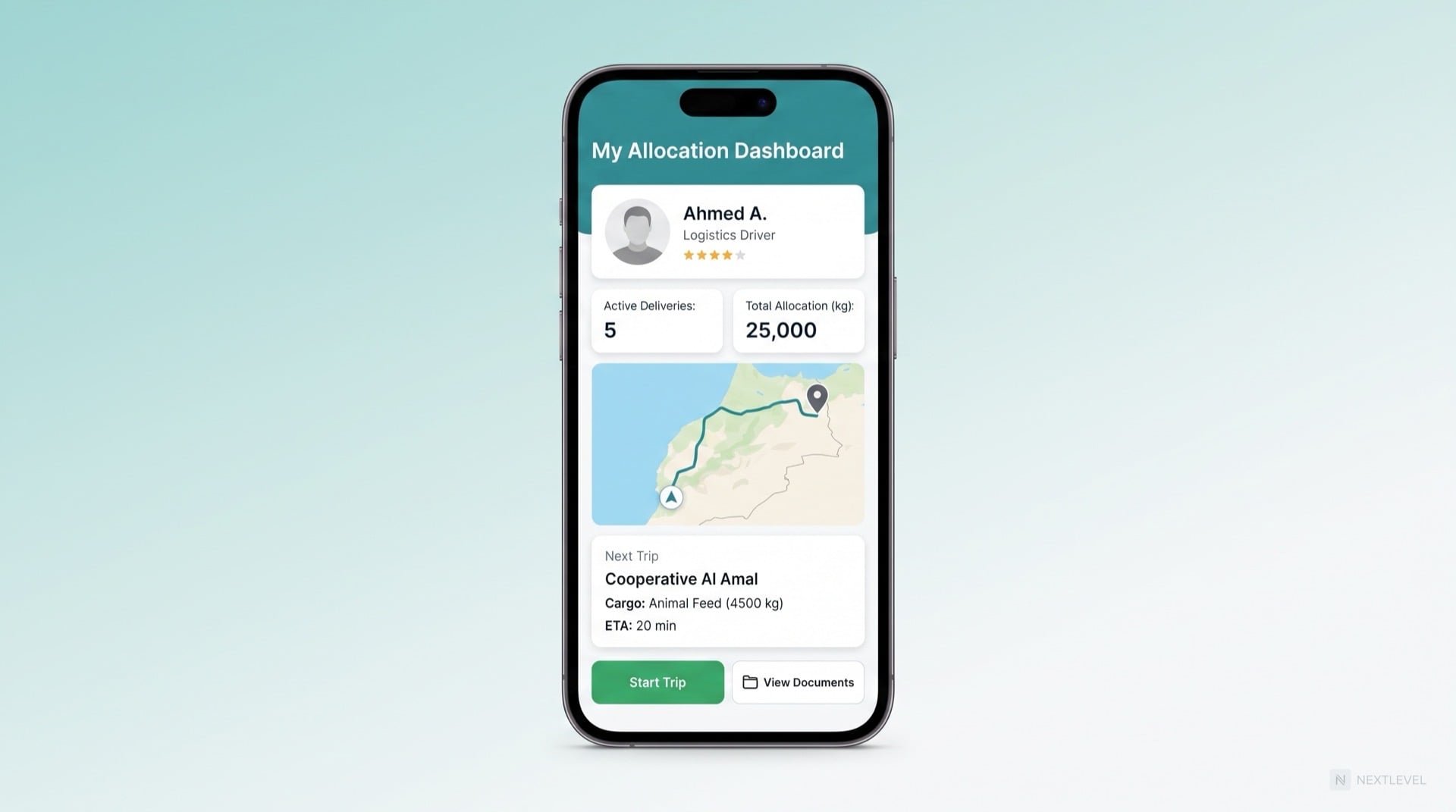
Suppliers juggled inconsistent pricing, manual invoicing, and no digital order management. Drivers had no delivery workflow, no navigation support, and no way to capture proof of delivery in rural areas with poor connectivity. Every step in the chain was a potential point of failure.
Five separate products serving five different user types — all mapped against one shared backend before a line of code was written. The architecture decisions that kept a government-scale platform shippable by a focused team — without a year of committee-driven drift:
Node.js APIs on AWS with MongoDB serving the Federation panel, beneficiary app, supplier dashboard, driver app, and call center — so an order placed by a cooperative appears in the supplier's queue and the Federation's reports in real time.
Last-mile deliveries confirmed with digital proof — photos and signatures captured on the route — so the subsidy chain closes even where paperwork used to disappear. Simple, resilient driver flows designed for the road, not the office.
Quota allocation, order limits, and subsidy rate configuration are enforced at the data layer — not just the UI — so beneficiaries cannot exceed their AOQ and the Federation's audit trail is always clean.
From tech-limited farmers to Federation administrators, every interface was designed for the actual user — simple flows, clear status indicators, and Arabic-first where needed.
Phased demos with Federation stakeholders kept requirements grounded in operational reality — not assumptions.
AOQ quota is the rule the whole subsidy chain rests on. The obvious place to enforce it is the screen where a cooperative places an order — which is also the place that stops being the only one the moment a second client exists.
The Federation sets quota allocation and subsidy rates from its own panel, and all five products inherit them. No screen can be the one that lets a cooperative through.
Subvention Maroc Lait is live — connecting 2,000+ cooperatives, suppliers, drivers, and the Federation on one digital platform.
The entire subsidy chain — from quota allocation to delivery confirmation — now runs digitally, replacing paper-based processes that caused delays and leakage.
AOQ quota enforcement at the data layer means beneficiaries cannot exceed their allocation and the Federation's audit trail is always clean — no manual reconciliation needed.
Suppliers generate monthly invoices digitally and track every order from placement to delivery — replacing manual invoicing that caused payment delays.
Rural last-mile deliveries are confirmed with digital proof — photos and signatures captured on the route — so the subsidy chain closes even where paperwork used to disappear.
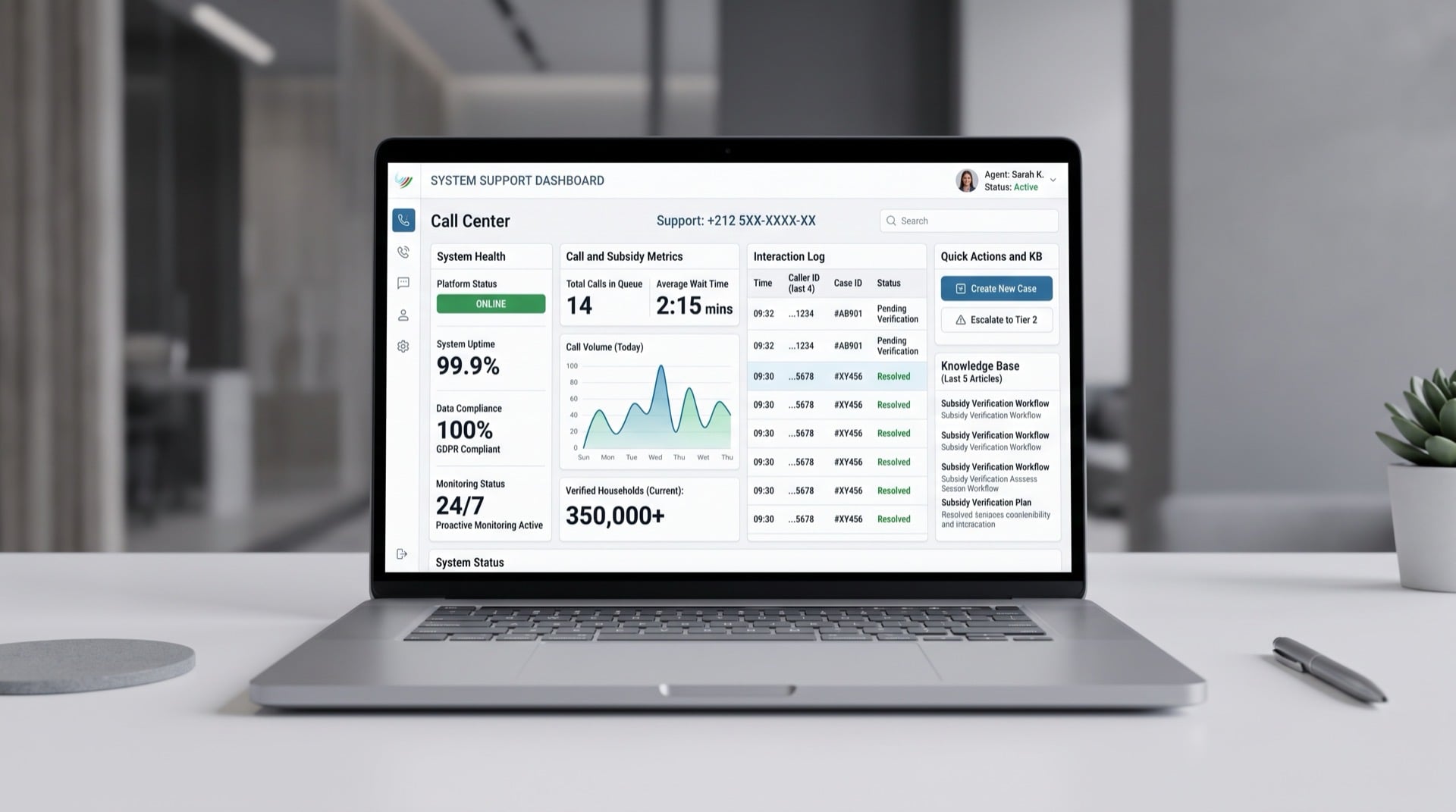
The call center panel gives support agents full visibility into orders, deliveries, and accounts — reducing resolution time for cooperative queries.
The Federation controls the entire ecosystem from one dashboard: quota allocation, subsidy rates, real-time reporting, and audit-ready records — no developer needed for daily operations.
One shared backend means every action across all five products is reflected in real time — an order placed by a cooperative appears in the supplier's queue and the Federation's reports instantly.
Got a build that has to hold under real-world load?
5 separate products. One shared backend. One team. One timeline.
Every tool below shipped to production — no résumé-ware.
We already have. Subvention Maroc Lait manages Morocco's animal feed subsidies end to end — quota allocation (AOQ), beneficiary ordering, supplier invoicing, delivery proof, and disbursement — for 2,000+ cooperatives on one audit-ready backend.
By enforcing the rules in the data layer, not in policy documents. Quotas, order limits, and subsidy rates are enforced at the database level, every delivery closes with digital proof, and the Federation's audit trail stays clean without manual reconciliation.
That's the architecture we specialize in: five products — admin panel, beneficiary app and web, supplier dashboard, driver app, and call center panel — on one shared backend, so every action is reflected across the whole chain in real time.
Yes. We're a US-registered company (Next Level Software LLC) with experience delivering multi-stakeholder platforms across Africa, the Gulf, Europe, and the Americas — and we're comfortable with the procurement, documentation, and accountability standards institutional work demands.
We've already solved quota enforcement, multi-panel ecosystems, digital proof of delivery, and audit-ready reporting.
See exactly how we'd scope yours.