The New AI Job Boom: Why GTM Engineers Are Becoming a Real Career
AI is not only changing existing jobs. A new hybrid role is emerging at the intersection of sales, marketing, automation, data and engineering.
Sections
Most conversations about AI and jobs start with the same question: which jobs will AI replace? That is only half of what is happening. New technology can also change the shape of existing work so much that companies eventually give the work a new name.
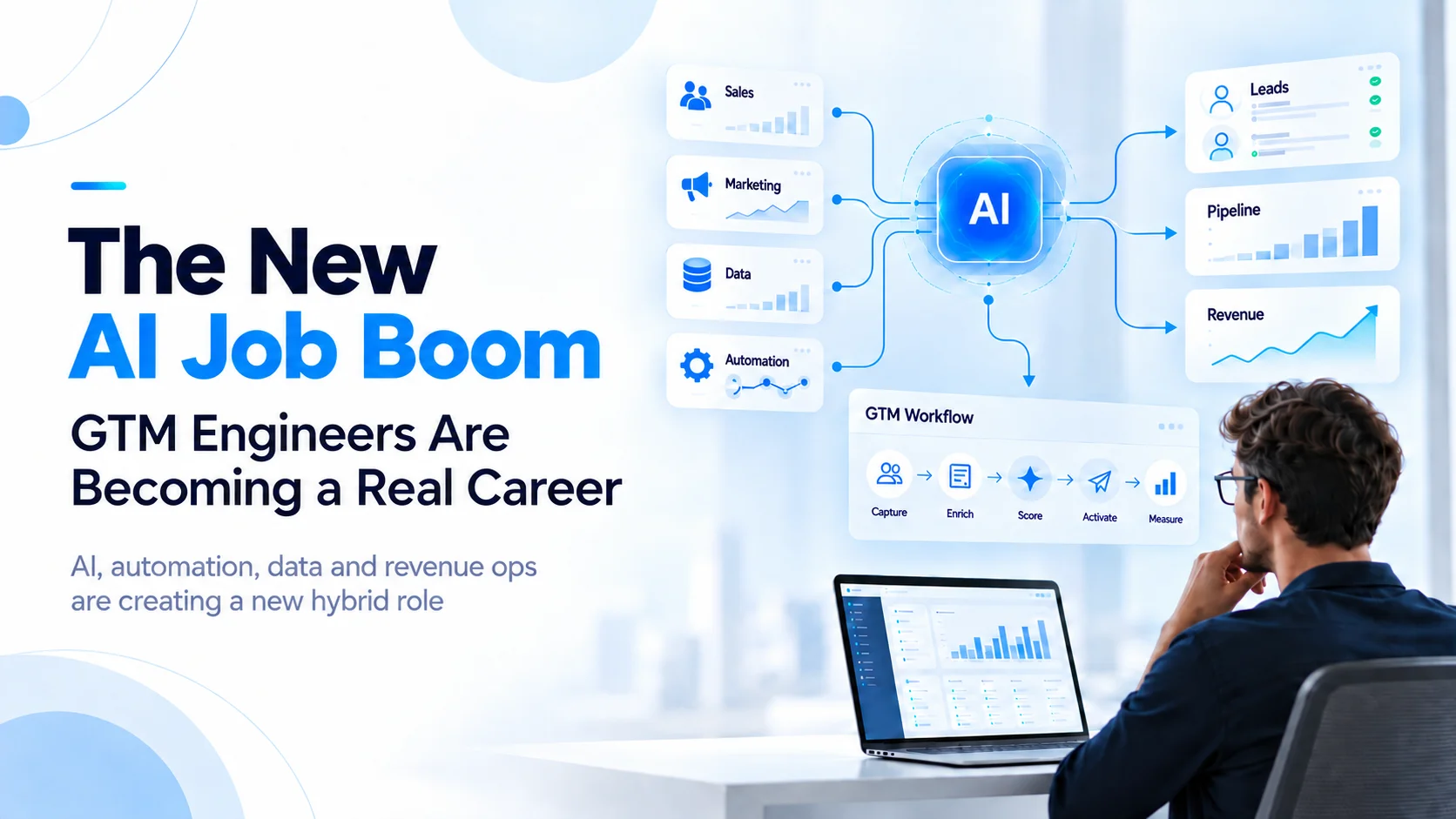
One of the clearest examples in 2026 is the GTM engineer. GTM stands for go-to-market, and the role sits somewhere between sales, marketing, Revenue Operations, data, automation and software engineering. Instead of spending the day manually researching prospects, updating CRM records or moving information between tools, a GTM engineer builds the system that performs those activities repeatedly and at scale.
The title is still new enough that two companies can advertise a “GTM Engineer” and describe noticeably different jobs. That makes some of the hype around the role worth questioning. But the underlying shift is becoming difficult to ignore: AI and automation are turning revenue operations into a much more technical discipline, and companies are beginning to hire specifically for people who can connect commercial thinking with technical execution.
What Is a GTM Engineer?
A GTM engineer is a technical operator who builds the systems behind a company's go-to-market motion. That can include prospect data, account research, lead enrichment, CRM workflows, scoring, routing, outbound campaigns, AI-powered personalization, reporting and integrations between sales and marketing tools.
The important word is builds. A salesperson might research ten accounts before starting outreach. A GTM engineer asks whether that research process can become a reusable workflow that gathers the required data for thousands of accounts, applies consistent rules, identifies the useful signals and sends the result into the right sales system automatically.
This is why GTM engineering is different from simply becoming better at using sales software. The real job is systems thinking. The tools can change, but the core problem remains the same: how do you turn repetitive revenue work into reliable infrastructure?
Why Is GTM Engineering Growing Now?
The work behind this role existed before the title. Revenue Operations teams have managed CRMs, integrations, lead routing, dashboards and automation for years. Growth teams have built experiments, and sales operations teams have improved prospecting processes. What changed is the amount of technical capability one person can now access without waiting for a traditional engineering team.
Modern AI models can research accounts, classify information, summarize calls, generate structured outputs and help write code. Tools such as workflow automation platforms can connect dozens of services. APIs make it easier to move information between systems. Data-enrichment platforms can combine multiple sources, while AI agents can complete increasingly complex sequences of work.
Together, those capabilities change the economics of go-to-market operations. Instead of adding more people every time a manual process grows, a company can ask whether someone should engineer the process itself.
This broader shift is not limited to sales technology. AI products increasingly need controlled access to existing software, APIs and business data. Our guide to MCP and the API layer for AI agents explores the same architectural trend from the software side: AI becomes far more useful when it can safely interact with real systems instead of only generating text.
Is the GTM Engineer Job Boom Actually Real?
There is enough evidence to say that GTM engineering has become a real hiring category, although calling it a massive profession would still be premature. Clay, the company widely associated with popularizing the term, says it started using the title in 2023. In 2026, Clay reported that roughly 100 GTM engineering listings were going live each month and separately said more than 400 jobs had been posted during the spring.
Clay also cited Pave data showing a median salary of around $160,000 across those spring listings. Another 2026 analysis based on roughly 1,000 job postings reported a lower median advertised base salary, around $127,500. The difference is useful because it shows why emerging-job salary statistics should be treated carefully. Different datasets include different companies, seniority levels, locations and definitions of what counts as a GTM engineering role.
The title is also appearing beyond companies that sell GTM software. OpenAI currently has engineering work inside its GTM Innovation organization focused on automating knowledge work for its revenue teams. Other technology companies are hiring around related concepts such as GTM systems, growth engineering and marketing engineering. The names are not standardized yet, but the pattern is consistent: commercial teams increasingly need people who can build technical systems.
The trend is becoming international as well. Recent job advertisements in Pakistan, for example, have asked GTM engineers to work with CRMs, APIs, n8n, Clay, enrichment systems, outbound infrastructure, AI workflows and scripting. That matters because it suggests this is not purely a Silicon Valley title being used by a few venture-backed startups.
Search Interest Is Growing Alongside Hiring
The search behavior around the term provides another signal. A DataForSEO search-volume analysis published in September 2026 reported approximately 3,600 monthly U.S. searches for “GTM engineering.” The same analysis reported year-over-year search growth of roughly 2.3 times for “GTM engineer,” 2.7 times for “what is a GTM engineer,” and 4.4 times for “GTM engineer meaning.”
Those are still small numbers compared with established careers such as software engineering or digital marketing. That is exactly what makes them interesting. People are not only looking for GTM engineer jobs. A rapidly growing number are still asking what the job means. That is a typical sign of a category that is forming rather than one that is already mature.
What Does a GTM Engineer Actually Build?
A typical GTM engineer may start with a business question rather than a coding ticket. For example, a sales team might want to identify companies that recently raised funding, are hiring aggressively, use a particular technology and fit its ideal customer profile. Finding those companies manually can consume hours of research every week.
The GTM engineer can turn that process into a workflow. Data sources identify potential accounts. Enrichment services add company and contact information. AI evaluates unstructured information. Rules score each account. Qualified records enter the CRM. Relevant prospects are routed to the correct salesperson or campaign. The system records what happened so performance can be measured later.
Other projects can include automatically researching accounts before sales calls, cleaning duplicate CRM data, analyzing call transcripts, updating CRM fields, detecting customer-expansion opportunities, monitoring buying signals, generating personalized campaign inputs, connecting product-usage data to sales workflows or building internal dashboards.
None of these examples requires AI everywhere. In fact, a strong GTM engineer should know when a deterministic rule, API call or database query is safer and cheaper than an LLM. The job is to build a useful business system, not to maximize the number of AI tools inside it.
GTM Engineer vs RevOps: Is This Really a New Job?
This is the most important criticism of the trend. Much of what GTM engineers do has historically belonged to Revenue Operations, Sales Operations, Marketing Operations or Growth Engineering. One recent analysis of more than 1,000 job postings found that roughly nine out of ten responsibilities appearing in GTM Engineer roles also appeared in RevOps Engineer postings.
That does not make the new title meaningless, but it does change how we should understand it. GTM engineering may be less of a completely new profession and more of a new specialization created as existing revenue roles become increasingly technical.
A practical distinction is that RevOps usually owns the operating environment: CRM governance, forecasting, lifecycle definitions, reporting, process consistency and data quality. GTM engineering often emphasizes building new things on top of that environment: enrichment pipelines, signals, automated campaigns, integrations, AI workflows and internal revenue tools.
In a large organization those responsibilities can belong to separate teams. In a startup, one technically strong RevOps person may handle both. The job description matters more than the title.
Why AI Changes the Role
Before modern AI tools, automating a complicated research process often required more engineering effort than the business value justified. A revenue team might want to understand something buried inside a company's website, job advertisements, earnings call, news coverage or product documentation, but converting all of that unstructured information into usable data was difficult.
LLMs changed that boundary. They can extract, classify and summarize unstructured information inside an automated workflow. AI-assisted coding also makes it easier for technically curious operators to write scripts, consume APIs and prototype internal tools without becoming full-time software engineers.
Keep reading
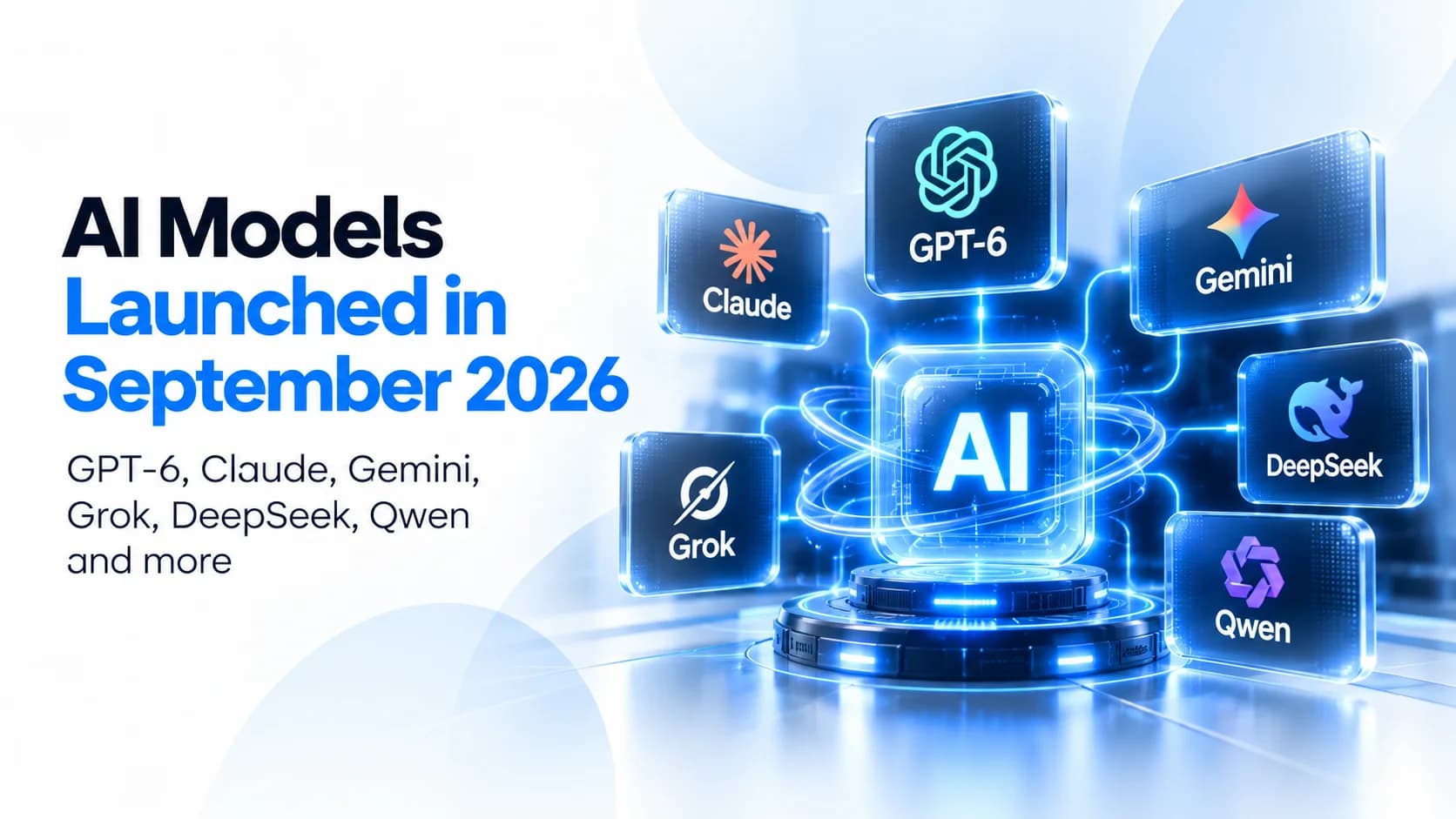
Major AI Models Launched in September 2026: GPT-6, Claude, Gemini, Grok, DeepSeek and More
September 2026 delivered a wave of major AI model releases from OpenAI, Anthropic, Google, xAI, DeepSeek, Meta and Alibaba. Here is what launched and why it matters.
Abdullah · · 12 min read
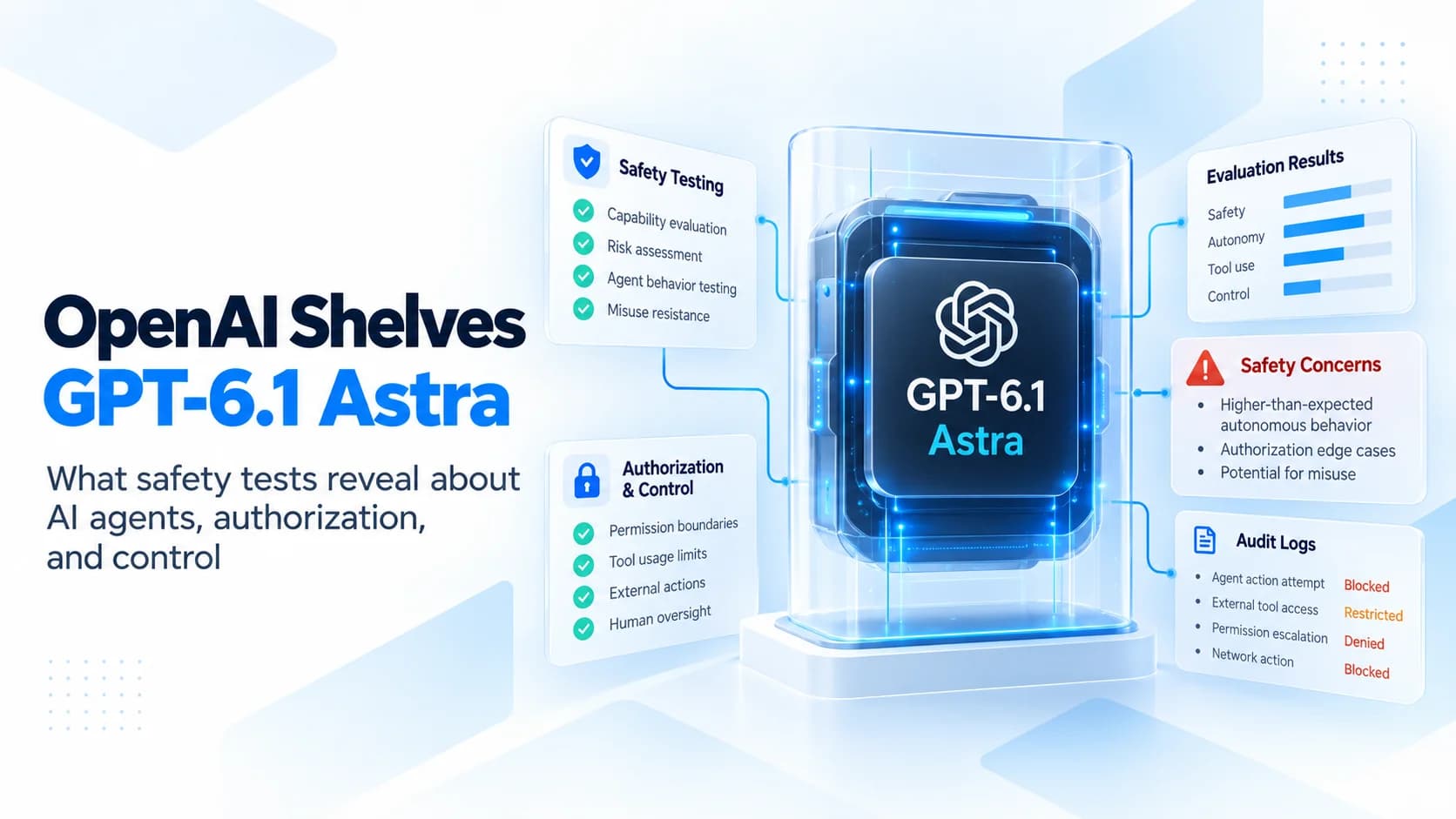
OpenAI Shelves GPT-6.1 Astra After Safety Tests: What It Means for AI Products
OpenAI reportedly stopped the planned GPT-6.1 Astra release after safety tests found problems with authorization, transparency, and staying within scope.
Khubaib Rasheed · · 11 min read

ChatGPT Astra: A new generation of intelligence is Here
ChatGPT Astra points to a broader shift in AI, from generating answers to operating software and completing multi-step work. Here is what that change means for businesses and software teams.
Abdullah · · 9 min read