How Much Does It Cost to Develop an App in 2026?
A practical guide to app development costs, key pricing factors, platform choices, MVP budgets, and ongoing maintenance.
Sections
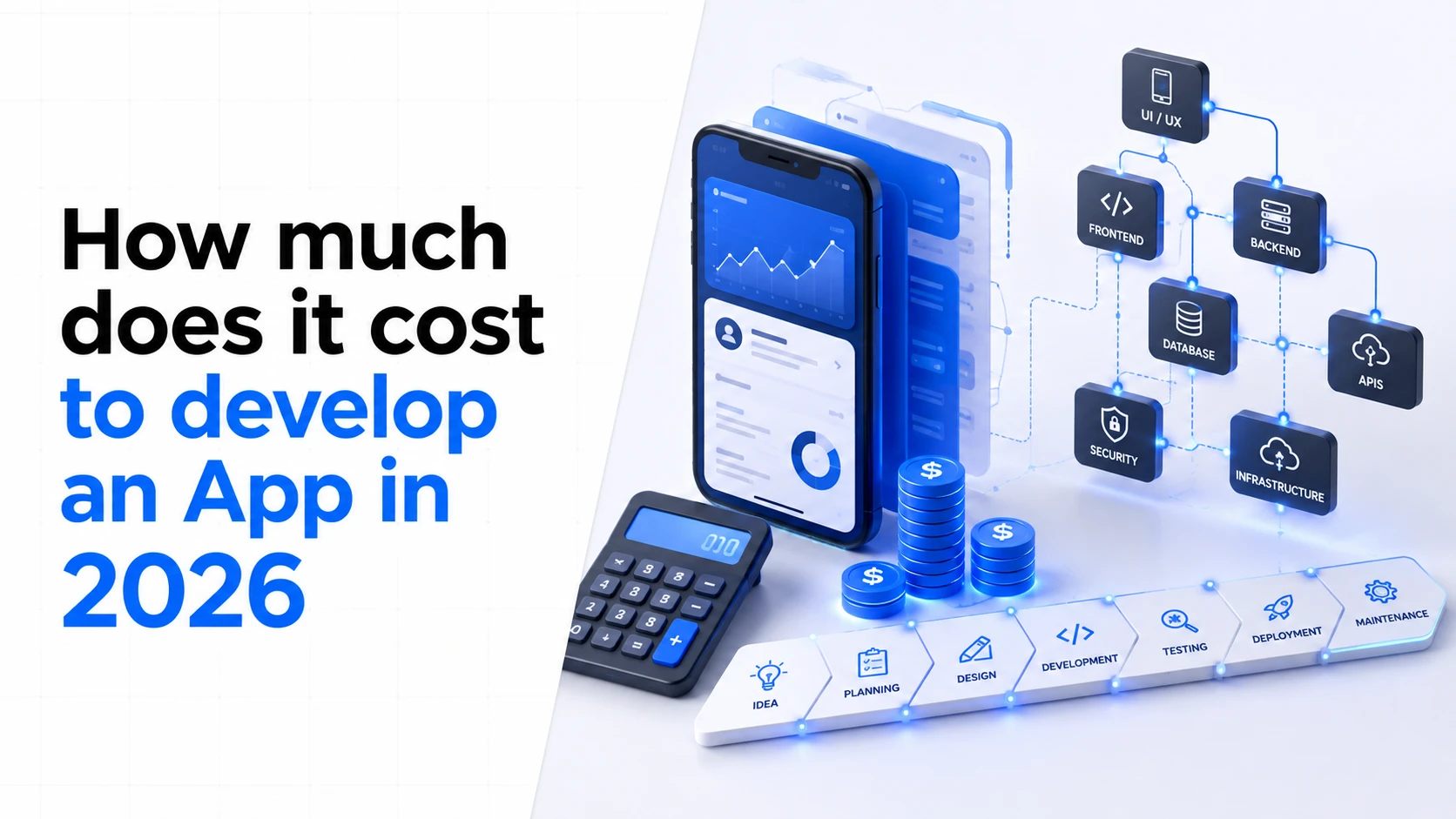
If you are asking how much it costs to build an app in 2026, the honest answer is that there is no single price. Current industry estimates range from around $15,000 for a simple app to $500,000 or more for complex products. The gap is large because an app with login, profiles, and a few screens is a very different project from a marketplace with payments, real-time features, multiple user roles, and a custom backend.
There is another useful number to consider. Next Level Software has delivered 100+ projects, including more than 100 mobile apps. Its current mobile app development service starts at $6,000. That starting price is not an average and it does not mean every app costs $6,000. It is simply the published starting point for a defined scope.
So, how much does it cost to build an app in 2026?
For a broad market view, current 2026 guides put app development across a very wide range:
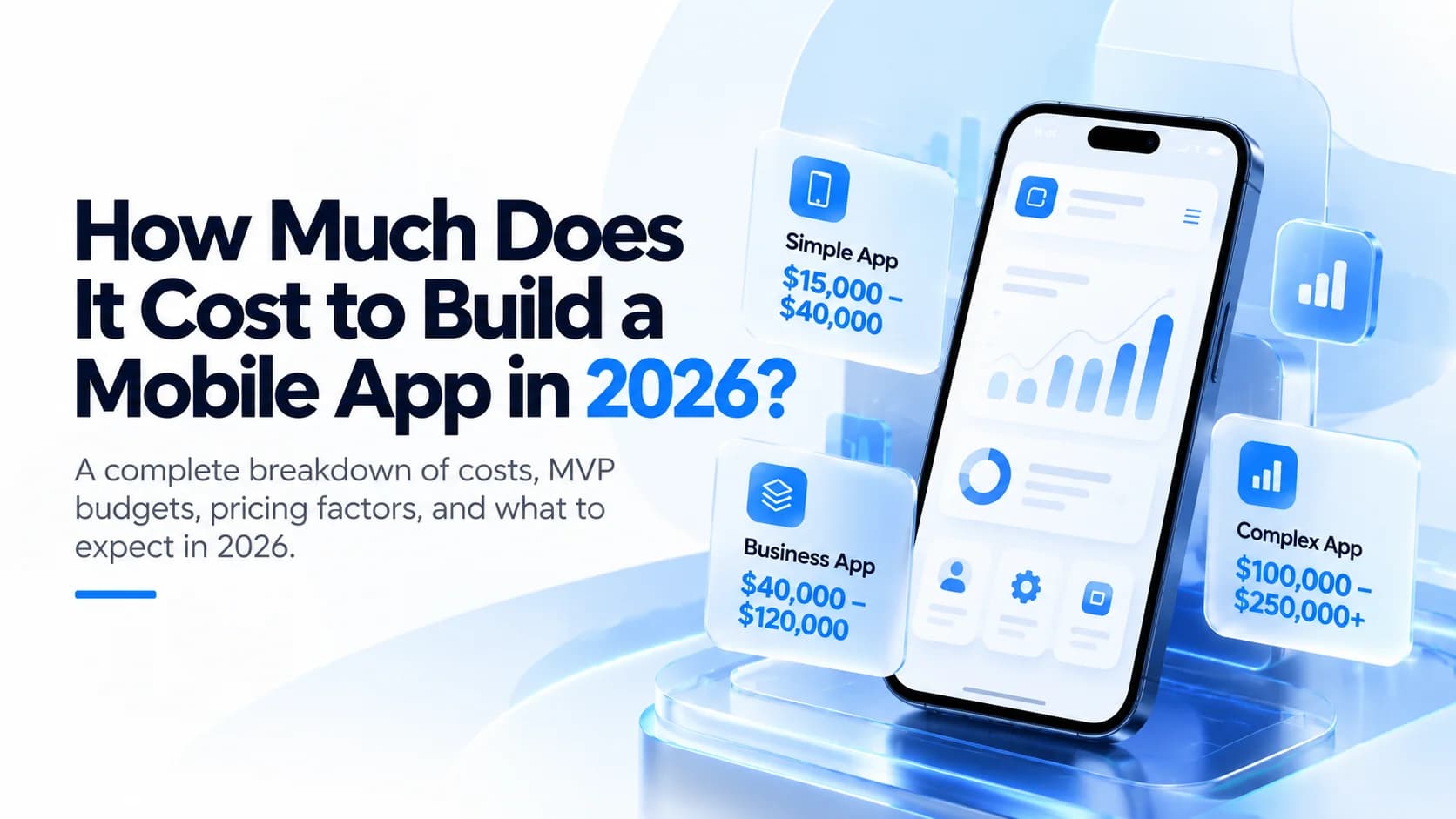
Simple apps: roughly $15,000 to $40,000 in some market estimates.
Mid-level apps: roughly $40,000 to $120,000, depending on features and integrations.
Advanced apps: roughly $100,000 to $250,000 or more.
Enterprise apps: $250,000 to $500,000+ when scale, security, compliance, and complex integrations are involved.
These are market benchmarks, not a quote for your project. The useful question is what sits inside the estimate.
Why app development prices vary so much
The number of screens matters, but it is only one part of the budget. The biggest cost differences usually come from what the app has to do behind those screens.
1. Features and business logic
A basic profile screen is relatively straightforward. A payment flow, booking system, live tracking feature, recommendation engine, or multi-role workflow needs much more backend logic and testing.
For example, a marketplace may need a customer app, seller tools, payments, commissions, notifications, approvals, and an admin panel. That is effectively several connected products rather than one simple app.
NLS has built products with this kind of multi-sided structure. FitFinds, for example, combines a user app with merchant and admin products on one backend.
2. Number of platforms
Building for one platform and building for both iOS and Android are different decisions. Native development means separate platform work. Cross-platform development can reduce duplicated work when the product is a good fit for it.
NLS currently builds cross-platform apps with Flutter and React Native, while also supporting native iOS and Android development where the project needs it. The right choice depends on the product, not simply on which option has the lowest headline price.
3. Backend and integrations
The visible app is only part of the product. The backend may handle authentication, databases, payments, notifications, analytics, APIs, permissions, real-time updates, and business rules.
Third-party integrations can also change the budget quickly. A simple content app may need very few external services. A logistics or commerce product may depend on payment providers, maps, shipping systems, inventory services, or other APIs.
4. Design and user experience
Design costs depend on how much of the product needs to be designed from scratch. A small utility app with familiar screens needs less design work than a consumer product with complex navigation, custom interactions, animations, and several user journeys.
Good design also reduces development risk. Finding a problem in a prototype is usually easier and cheaper than finding the same problem after the feature has been coded.
5. Testing and device coverage
Testing is easy to underestimate when you are looking only at the feature list. An app needs to work across supported devices, operating system versions, network conditions, permissions, and different user paths.
Complex apps create a larger testing surface. Payments, real-time features, multiple roles, offline behaviour, and third-party integrations all add cases that need to be checked before launch.
What does an app cost at different levels?
Instead of treating one number as the answer, it is more useful to think about the product you are actually building.
A simple app
A simple app may have a small number of screens, basic authentication, straightforward content, and limited backend requirements. Current market estimates often place this type of product in the tens of thousands of dollars, although smaller defined projects can start below those broader agency benchmarks.
The important question is whether the scope is genuinely simple. Adding payments, custom dashboards, real-time features, or several user roles can move the project into a different budget range.
A mid-level product
This is where many commercial apps become more involved. You may have custom UI, user accounts, payments, notifications, search, analytics, API integrations, and an admin system.
Market estimates commonly place these products around the $40,000 to $120,000 range, but the actual quote depends heavily on the number and complexity of integrations and workflows.
An advanced app
Advanced products may include real-time communication, subscriptions, wallets, multiple user roles, complex dashboards, AI features, or several external systems.
At this level, estimates can move above $100,000 and continue upward as the architecture, security requirements, and number of connected systems grow.
An enterprise product
Enterprise applications can reach $250,000 to $500,000 or more. At this level, the budget is often driven by scale, security, compliance, integrations, data requirements, monitoring, and the number of teams or systems that need to work together.
The price is no longer mainly about the number of screens. It is about the systems behind the product and the cost of getting them right.
What 100+ NLS deliveries tell us about app pricing
The useful lesson from delivering 100+ projects is not that every app should fit into one average price. It is that scope needs to be clear before a price becomes meaningful.
NLS currently publishes a starting price of $6,000 for mobile app development, with an average timeline of 8 to 12 weeks. The final price depends on factors such as screens, integrations, and whether the product targets iOS, Android, or both.
That is why a starting price should never be confused with a project estimate. A small, focused product can be much cheaper than a platform with several roles, integrations, and complex business logic.
If you are starting with an idea rather than a complete product specification, MVP development can be a better way to define the first release. The goal is to identify the smallest useful version of the product instead of paying to build every possible feature at once.
What makes an app more expensive?
Multiple user roles: Customers, providers, merchants, drivers, staff, and administrators each add workflows and permissions.
Real-time functionality: Live tracking, chat, live scores, and real-time status updates require more backend work and testing.
Payments: Payment gateways, subscriptions, wallets, refunds, and payouts introduce financial workflows that need careful handling.
AI features: AI can add model integration, data handling, evaluation, monitoring, and ongoing usage costs.
Complex integrations: Every external system adds development and testing work.
Security and compliance: Sensitive data and regulated industries can require additional controls and review.
Multiple platforms: Supporting iOS, Android, web, and other interfaces increases the amount of product that must be tested and maintained.
Examples of products that need more than one app
Some products look like a mobile app from the outside but are actually a connected software system.
Ride-hailing is a good example. You may need a passenger app, driver app, admin panel, location services, payments, and dispatch logic. NLS's iTaxi MX is an example of this structure, with rider, driver, and admin products connected to one backend.
Marketplaces have a similar issue. Buyers and sellers often need different workflows, while the business needs tools for approvals, payments, commissions, reporting, and administration. NLS works with marketplace platforms where these different sides have to work together.
Commerce products can also become more complex than their storefront suggests. Inventory, checkout, promotions, payments, order management, and administration all sit behind the customer-facing screens. See NLS's e-commerce and retail software work for the types of systems involved.
How to reduce app development cost without cutting the wrong things
Start with one core workflow
Before adding every feature from the product roadmap, identify the main action the user needs to complete. Build that workflow properly first.
Choose the first platform carefully
If your early users are concentrated on one platform, launching there first may make more sense than funding two complete native apps immediately. Cross-platform development can also be a practical option when the product fits it.
Keep integrations focused
Every integration creates work. If an external service is not necessary for the first release, consider whether it can wait.
Do not remove QA to save money
Reducing unnecessary scope is usually safer than reducing testing. A cheaper build that reaches users with serious bugs can create more work later.
Define what is included before development starts
A clear scope makes a price much more useful. It should explain the platforms, major features, integrations, design expectations, testing, launch work, and what happens when the scope changes.
Do you need $100,000 to build an app?
No. You can build a focused app for much less than $100,000. NLS currently publishes mobile app projects starting from $6,000, while broader industry benchmarks place more complex products much higher.
The mistake is taking either number and applying it to every project. A $6,000 starting price does not describe a complex marketplace. A $250,000 enterprise benchmark does not describe a focused MVP.
Your budget should follow the scope you actually need.
What should your 2026 app budget include?
When comparing quotes, look beyond the development number. Ask what the price covers.
Product discovery and scope definition
UI and UX design
Mobile development
Backend development and APIs
Third-party integrations
Quality assurance and device testing
App Store and Google Play launch work
Analytics and crash monitoring
Post-launch bug fixes and support
Future feature development
Also separate build costs from ongoing ownership costs. Cloud services, third-party software, payment processing, support, maintenance, and future product changes can continue after launch.
The most useful answer to app development cost
So, how much does it cost to build an app in 2026? A simple app may cost tens of thousands of dollars, while advanced and enterprise products can reach hundreds of thousands. Current market guides show a very wide range because the products being compared are often completely different.
The better way to budget is to define the first useful version, identify the platforms and integrations it needs, and then price that scope. NLS's experience across 100+ delivered projects supports the same practical lesson: the quality of the estimate depends on the quality of the scope.
If you already know what you want to build, start with mobile app development and define the first release before expanding the roadmap.
Keep reading
How Much Does It Cost to Build a Mobile App in 2026?
How much does a mobile app cost in 2026? Explore realistic development price ranges, MVP costs, major pricing factors, hidden expenses, and ways to budget smarter.
Khubaib Rasheed · · 17 min read
Old Is Gold: Why Custom Mobile Apps Still Matter in the AI Era
AI can add real value, but it can also add data, vendor, security, and compliance complexity. Here is why some custom mobile apps are better without it.
Khubaib Rasheed · · 17 min read
How to Turn an AI-Generated App Into Secure, Scalable, Production-Ready Software
AI can generate a working app fast. Learn what architecture, security, scalability, testing, and operations are needed before that prototype becomes production software.
Abdullah · · 18 min read