Claude Opus 5.5: What's New, Pricing, Coding, Benchmarks, and What Users Are Asking
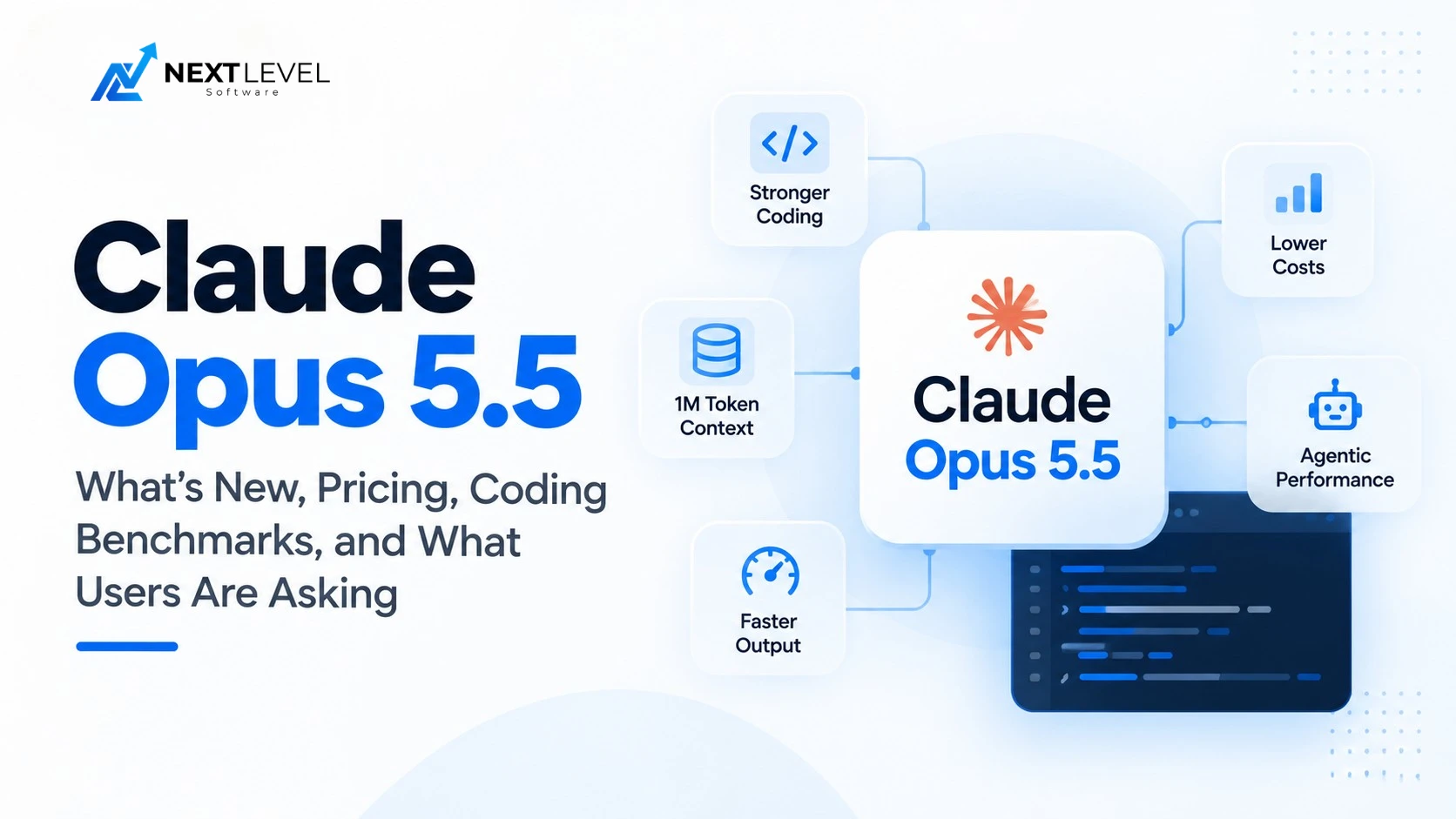
Anthropic's newest Opus model targets long-running coding and knowledge work with lower costs, a 1M-token context window, faster output, and stronger agentic performance.
Sections
Claude Opus 5.5: What's New, Pricing, Coding, Benchmarks, and What Users Are Asking
Anthropic released Claude Opus 5.5 on September 22, 2026, and the interesting part of the launch is not simply that another Claude model is available. The bigger change is what Anthropic appears to be optimizing for: long-running software work, AI agents, large contexts, lower inference costs, and models that can keep working through complicated tasks without requiring constant human intervention.
That has immediately created practical questions among developers and Claude users. Is Opus 5.5 actually better than Opus 5? Is the more expensive Fable 5.1 still necessary? How much does Opus 5.5 cost? How well does it work inside Claude Code? Is the 1 million token context window useful in real projects? And should teams already using another coding model consider switching?
This article looks at those questions using Anthropic's published specifications and benchmarks, together with the early themes emerging from developer discussions after launch. Because the model has only been publicly available for a few days, it is important to separate published measurements from early community impressions.
What Is Claude Opus 5.5?
Claude Opus 5.5 is the first model in Anthropic's new Claude 5.5 family. Anthropic describes it as a model for long-running agentic coding and knowledge work, which is a useful description of where frontier AI development is heading. The goal is increasingly not just to answer a question correctly, but to understand a larger task, use tools, work across substantial amounts of context, make changes, check those changes, and continue until meaningful work is complete.
According to Anthropic's Opus 5.5 announcement, the model performs around the level of Claude Fable 5.1 on most work while costing approximately 40% less to run than Opus 5 on typical token-billed workloads. Anthropic also reports that output generation is more than 30% faster than Opus 5.
The model is available through Claude, Claude Code, the Claude API, Amazon Bedrock, Google Cloud, Microsoft Foundry, and Claude Platform on AWS. Anthropic lists Opus 5.5 for Claude Pro, Max, Team, and Enterprise users in its consumer products.
The Claude Opus 5.5 Specifications That Matter
At the API level, Claude Opus 5.5 has a 1 million token context window, up to 128,000 output tokens for standard requests, adaptive thinking that is always enabled, and a default effort level of medium. Anthropic also lists a beta option for outputs of up to 300,000 tokens through its Message Batches API.
| Specification | Claude Opus 5.5 |
|---|---|
| Context window | 1 million tokens |
| Maximum standard output | 128K tokens |
| Input price | $4 per million tokens |
| Output price | $20 per million tokens |
| Cache read price | $0.20 per million tokens |
| Thinking | Adaptive, always on |
| Default effort | Medium |
| Knowledge cutoff | June 2026 |
| Release date | September 22, 2026 |
The context window deserves particular attention. A million tokens can allow an agent to work with large repositories, substantial document collections, long conversation histories, logs, specifications, and tool results without constantly compressing the working context. A large window does not guarantee that every token will be used perfectly, but it changes the kinds of workflows developers can reasonably attempt.
Why Coding Is the Main Story With Opus 5.5
Anthropic is positioning Opus 5.5 heavily around agentic software development rather than simple code completion. That means the model is intended for work such as investigating a large codebase, finding a root cause, editing multiple files, running commands, reviewing results, correcting failures, migrating systems, and continuing through a task for an extended period.
Anthropic reports several significant improvements in its launch benchmarks. On Terminal-Bench 4.0, which evaluates multi-step professional work performed through a command-line environment, Opus 5.5 scored 66.4% in Anthropic's published results compared with 52.3% for Opus 5. On CursorBench 4.0, which focuses on ambiguous multi-file coding work based on real Cursor sessions, Anthropic reports 57.8% for Opus 5.5 compared with 46.6% for Opus 5.
| Benchmark | Opus 5.5 | Fable 5.1 | Opus 5 |
|---|---|---|---|
| Terminal-Bench 4.0 | 66.4% | 55.8% | 52.3% |
| FrontierCode v1.1 | 54.4% | 50.3% | 48.0% |
| CursorBench 4.0 | 57.8% | 51.8% | 46.6% |
| AutomationBench | 40.0% | 31.4% | 26.9% |
These are Anthropic-reported results, and Anthropic itself makes an important point in the launch material: as frontier models become closer in capability, small benchmark differences are becoming less reliable indicators of how different models will feel in real work. That is a healthy caveat. A model winning a benchmark does not automatically mean it will be the best choice for every repository, architecture, programming language, agent harness, or development workflow.
The more meaningful question for engineering teams is whether the model can complete a larger percentage of real tasks correctly with fewer retries, fewer unnecessary changes, fewer tokens, and less human supervision. That is also why our earlier discussion of reviewing AI-generated software remains relevant. Faster code generation increases engineering leverage, but production responsibility still belongs to the team shipping the system.
Opus 5.5 vs Opus 5: The Cost Difference Is More Than the Token Price
One point that can easily cause confusion is Anthropic's statement that Opus 5.5 costs approximately 40% less to run than Opus 5. The raw API token prices alone are not 40% lower. Opus 5 cost $5 per million input tokens and $25 per million output tokens, while Opus 5.5 costs $4 and $20 respectively, which is a 20% reduction in those base rates.
The larger estimated saving comes from efficiency. Anthropic says Opus 5.5 typically uses fewer tokens to complete the same work. Lower token prices combined with lower token consumption produce the approximately 40% reduction Anthropic reports for typical workloads. Cache reads have also fallen from $0.50 to $0.20 per million tokens, which can matter considerably in long-running agent workflows where large portions of context are reused repeatedly.
This distinction matters for businesses building AI features. The important number is not simply the price of one million tokens. It is the cost of successfully completing the business task. A cheaper model that requires repeated attempts can cost more than an expensive model that completes the task once. Likewise, a strong model that can complete an agent workflow using fewer steps may improve both cost and latency.
Opus 5.5 vs Fable 5.1: Do You Still Need Anthropic's Higher-End Model?
This is one of the most interesting questions created by the launch. Anthropic says Opus 5.5 performs at the level of Fable 5.1 on most work, and Opus 5.5 leads Fable 5.1 on several of the benchmarks Anthropic published alongside the announcement.
That does not automatically make Fable 5.1 obsolete. Anthropic still positions Fable 5.1 for particularly demanding reasoning and long-horizon agentic work. Fable also uses a higher default effort level and costs considerably more through the API at $10 per million input tokens and $50 per million output tokens.
The practical change is that developers now have more reason to start with Opus 5.5 and escalate only when their own evaluations show that a harder task benefits from Fable. Choosing models by product tier alone makes less sense when a lower-cost model can reach similar performance on many workloads.
This is also a reminder that model comparisons can change very quickly. Our recent comparison of GPT-6 Astra and Claude Fable 5.1 examined the frontier only shortly before Opus 5.5 arrived. A model-routing strategy is therefore often more durable than designing an entire AI product around the assumption that one model will remain the permanent leader.
What Are Claude Users Actually Asking About Opus 5.5?
Recent discussions across Claude and Claude Code communities are clustering around a handful of practical questions rather than abstract benchmark scores. Developers want to know whether the model feels better during a full working day, whether it stays focused through large tasks, whether its responses are clearer, how quickly usage limits are consumed, whether it performs well on unfamiliar repositories, and whether it is strong enough to justify moving back from competing coding tools.
Early reports are generally positive around coding speed, instruction following, code review, debugging, and shorter explanations. Some developers who disliked Opus 5's tendency to overcomplicate tasks are specifically watching whether Opus 5.5 behaves more directly. Other users are comparing it with Fable 5.1 and competing coding models to decide which should become their default development agent.
These reports should be treated as early anecdotal evidence rather than a scientific evaluation. New model releases regularly produce a honeymoon period where enthusiastic users test the model on problems that fit its strengths. Reliable conclusions require longer usage across different repositories, languages, team structures, and workloads. Still, the questions themselves are useful because they show what working developers care about: completion quality, cost, clarity, autonomy, and how much supervision an AI agent requires.
Is Claude Opus 5.5 Better for Claude Code?
Claude Code is probably where many developers will notice Opus 5.5 most directly. A coding agent has access to much more than the prompt in front of it. It may inspect directories, read source files, run commands, modify code, execute tests, examine failures, search dependencies, and repeat the process until the task is complete.
That type of workflow rewards several of Opus 5.5's changes simultaneously. The 1 million token context window helps with large repositories. Lower cache-read pricing reduces the cost of repeatedly working with a large context. Improved agentic coding performance can reduce unnecessary steps. Faster output reduces some of the waiting inside longer sessions.
Anthropic also says an early tester used Opus 5.5 to audit and fix a roughly 200,000-line codebase in under three hours, compared with more than 20 hours for Opus 5 while consuming substantially fewer tokens. Another reported example involved a 680,000-line migration completed in less than a day. These are impressive examples, but they come from Anthropic's launch material and early testers rather than controlled independent studies, so they should be interpreted accordingly.
What Is Fast Mode in Claude Opus 5.5?
Anthropic also offers a research-preview Fast Mode for supported Opus models. According to the Claude Platform documentation, Fast Mode uses the same model but runs it through a faster inference configuration. Anthropic says output-token throughput can be up to 2.5 times higher than standard mode.
The trade-off is price. Opus 5.5 Fast Mode costs $8 per million input tokens and $40 per million output tokens, double the standard model's base input and output rates. That means Fast Mode is primarily interesting when developer time or response latency is more valuable than minimizing inference cost.
It is also important not to interpret Fast Mode as a smarter version of Opus 5.5. Anthropic says the model weights and capabilities are the same. The difference is inference speed.
Does the 1 Million Token Context Window Change How AI Products Are Built?
Potentially, but larger context should not become an excuse to send everything to the model. A million-token window can make large-codebase analysis, document processing, research, and long-running agents easier, but efficient AI systems still need good context management.
A production application should decide which information the model needs, what can be retrieved on demand, what should be cached, what should be represented as structured data, and which decisions should never be delegated to the model at all. Sending more context can increase cost and sometimes introduce irrelevant information that makes a task harder rather than easier.
We saw the same principle while building ALIFF's AI styling system. Generative intelligence was useful for outfit recommendations, but the production product also required a deterministic modesty-rule layer, structured wardrobe information, caching, streaming, quota management, and user feedback. The language model was important, but the architecture around it determined whether the feature could be trusted and operated economically.
What Developers Need to Know Before Migrating From Opus 5
For API users, upgrading is not only a matter of replacing the model name. Anthropic documents several behavioral and API changes. Adaptive thinking cannot be disabled in Opus 5.5, so applications should use the effort setting instead of older explicit thinking configurations. Some forced tool-choice patterns also need to change, and applications using older computer-use interfaces may need to migrate to newer tool definitions.
Teams should therefore treat a model upgrade like any other production dependency change. Run existing evaluations, regression tests, structured-output tests, tool-use tests, latency measurements, and cost measurements before replacing the model globally. A model can be generally better while still behaving differently in a workflow that depends on particular prompts or response structures.
The official Claude Opus 5.5 documentation includes the current model specifications and migration notes.
What Opus 5.5 Means for Businesses Building AI Products
The most important part of the Opus 5.5 release may not be one benchmark score. It is the continued improvement in the economics of capable AI agents. Models are becoming better at sustained work while providers simultaneously compete on token efficiency, caching, context size, and inference speed.
That makes workflows possible that would previously have been too expensive or unreliable. An AI application might inspect more documents before acting, maintain longer project context, perform several tool calls, validate its own output, or complete a larger business process rather than returning a single answer.
But stronger models do not remove product engineering. AI applications still need permissions, validation, observability, quotas, cost controls, fallbacks, structured business rules, testing, and clear boundaries around what an agent can do independently. If you are exploring those kinds of capabilities, our AI-assisted application development work focuses on building the complete system around the model rather than treating an LLM API call as the finished product.
Should You Switch to Claude Opus 5.5?
If you already use Opus 5 through the API or Claude Code, Opus 5.5 is worth evaluating because Anthropic is offering stronger published performance alongside lower base token prices and improved token efficiency. The case is particularly relevant for large-codebase work, long coding sessions, agents, code review, debugging, migrations, and other tasks where an AI system needs to maintain context over many steps.
If you currently use Fable 5.1, the decision is more workload-dependent. Opus 5.5 may provide comparable results at substantially lower API cost for many tasks, while Fable remains available for workflows where testing shows that its deeper reasoning is useful.
If you use another AI coding system, benchmark charts alone are not a strong reason to migrate. Take several representative tasks from your actual workload and measure success rate, developer corrections, tokens consumed, elapsed time, code quality, test results, and total task cost. The model that produces the highest benchmark score is not necessarily the model that creates the best engineering workflow for your team.
The Bigger Shift Is From Better Answers to Longer Autonomous Work
Claude Opus 5.5 is another sign that the AI model race is changing. Context windows are growing, token costs are falling, inference is getting faster, and frontier models are increasingly being evaluated on whether they can complete real work across tools and environments rather than simply produce impressive responses.
For developers, that could mean coding agents that handle larger parts of a ticket, migration, audit, or debugging process before asking for help. For businesses, it could mean AI applications that complete more of a workflow rather than stopping after generating a recommendation.
The engineering challenge moves with that capability. The question is no longer only, "Can the model do this?" It becomes, "Can the complete system let the model do this reliably, economically, securely, and with the right level of human control?"
Opus 5.5 makes that question more interesting because better agentic performance is arriving alongside lower costs. The teams that benefit most will probably not be the ones that simply replace one model name with another. They will be the ones that redesign workflows around what increasingly capable models can safely take responsibility for.
Official Sources and Further Reading
Keep reading

What Is Jev AI? Why TypeSafe’s New Model Is Built to Decide, Not Chat
Jev AI is TypeSafe’s new System One Model, built to return typed decisions, probabilities, and confidence instead of chat. Here is why that matters for software.
Abdullah · · 12 min read
What Is MCP? Why It Is Becoming the API Layer for AI Agents
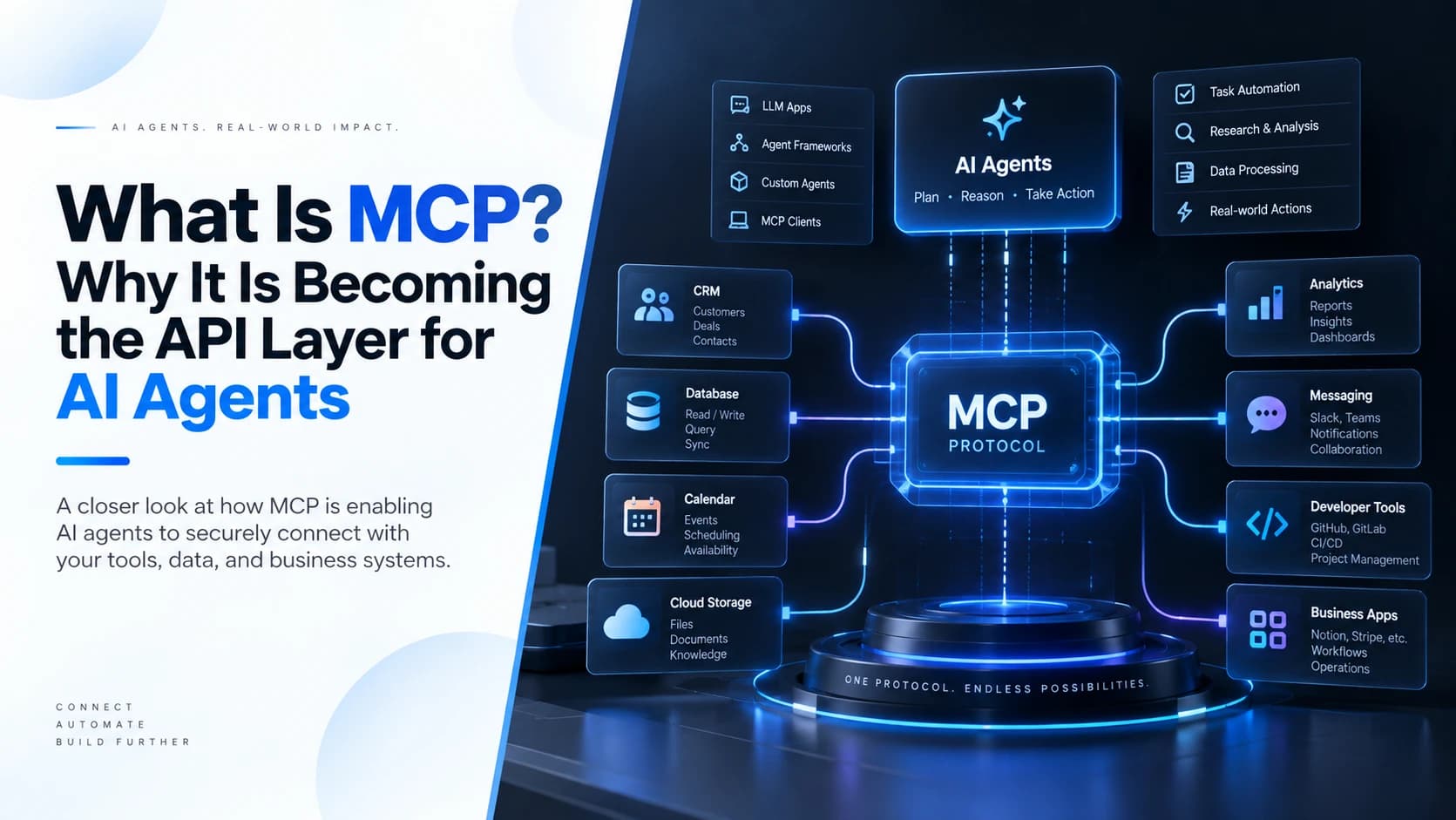
Model Context Protocol gives AI agents a standard way to connect with tools and data. Learn how MCP works, why it matters, and where it fits in AI products
Abdullah · · 15 min read
ChatGPT Astra vs Claude Fable 5.1: Which AI Model Is Better in 2026?
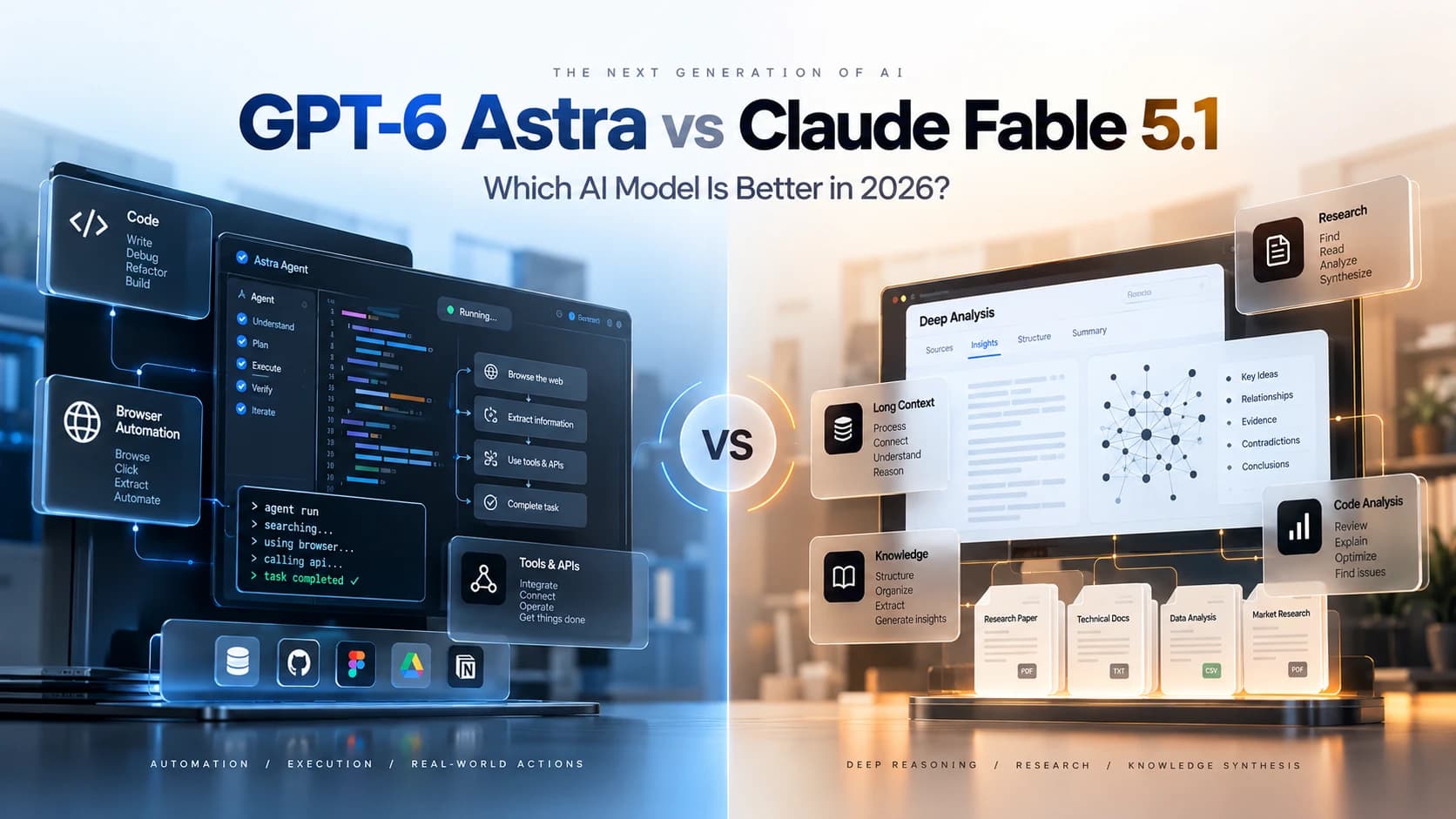
GPT-6 Astra and Claude Fable 5.1 are both frontier AI models. We compare coding, agents, reasoning, context, pricing, and practical business use to see where each one wins.
Abdullah · · 18 min read